
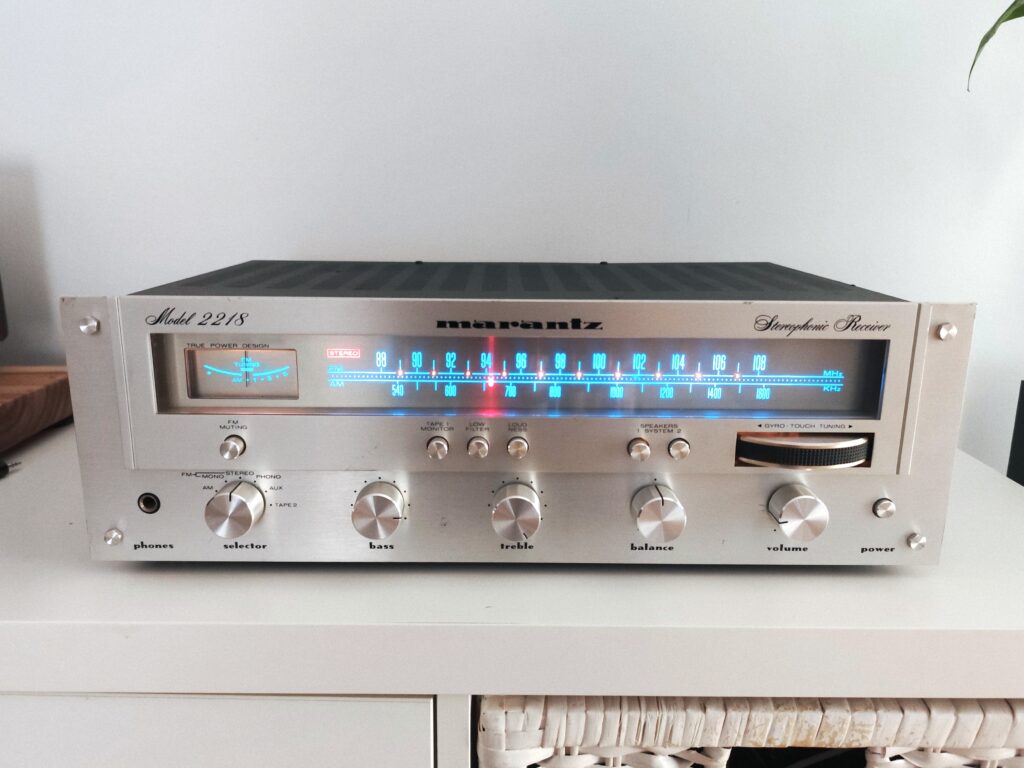
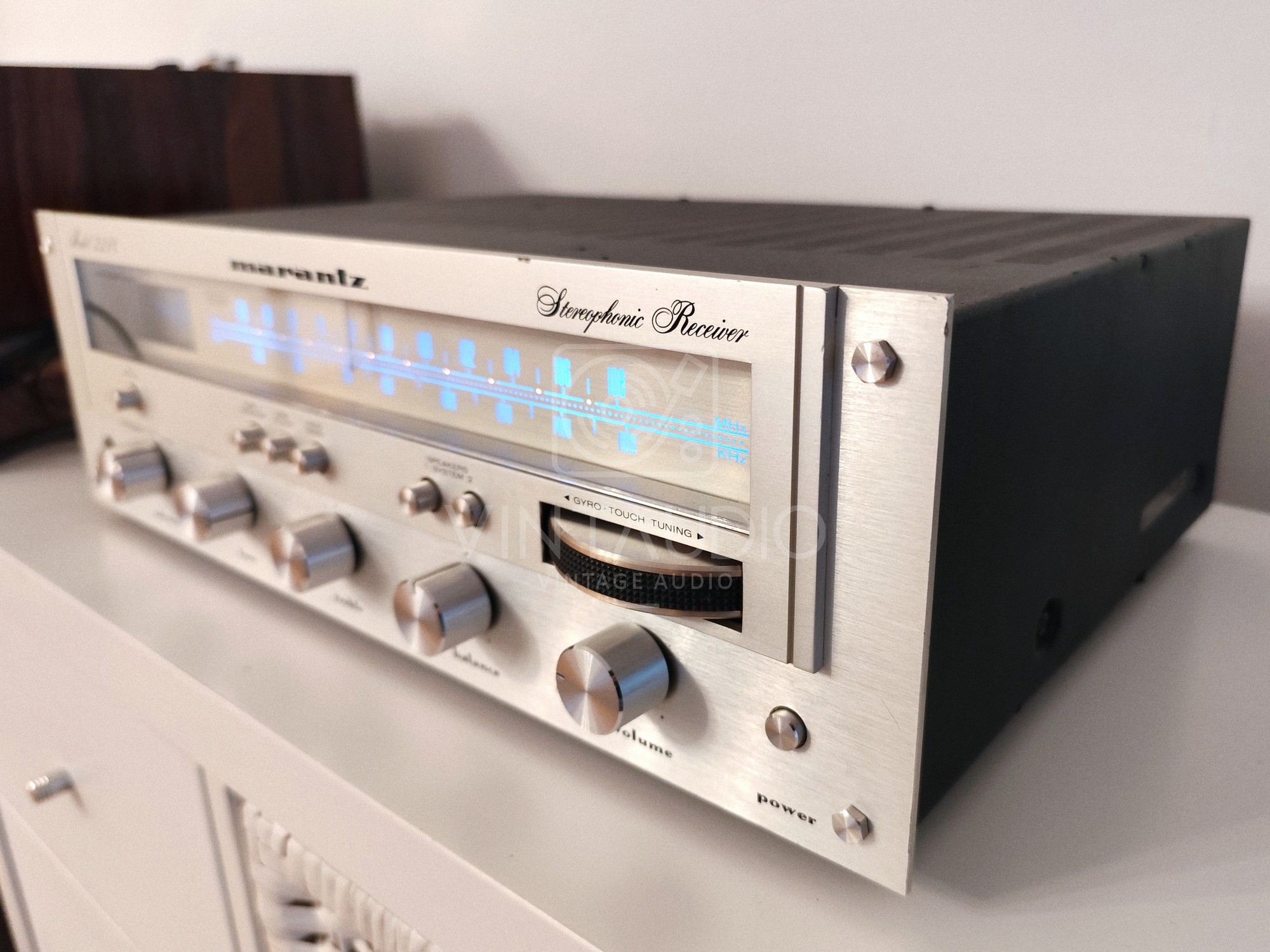
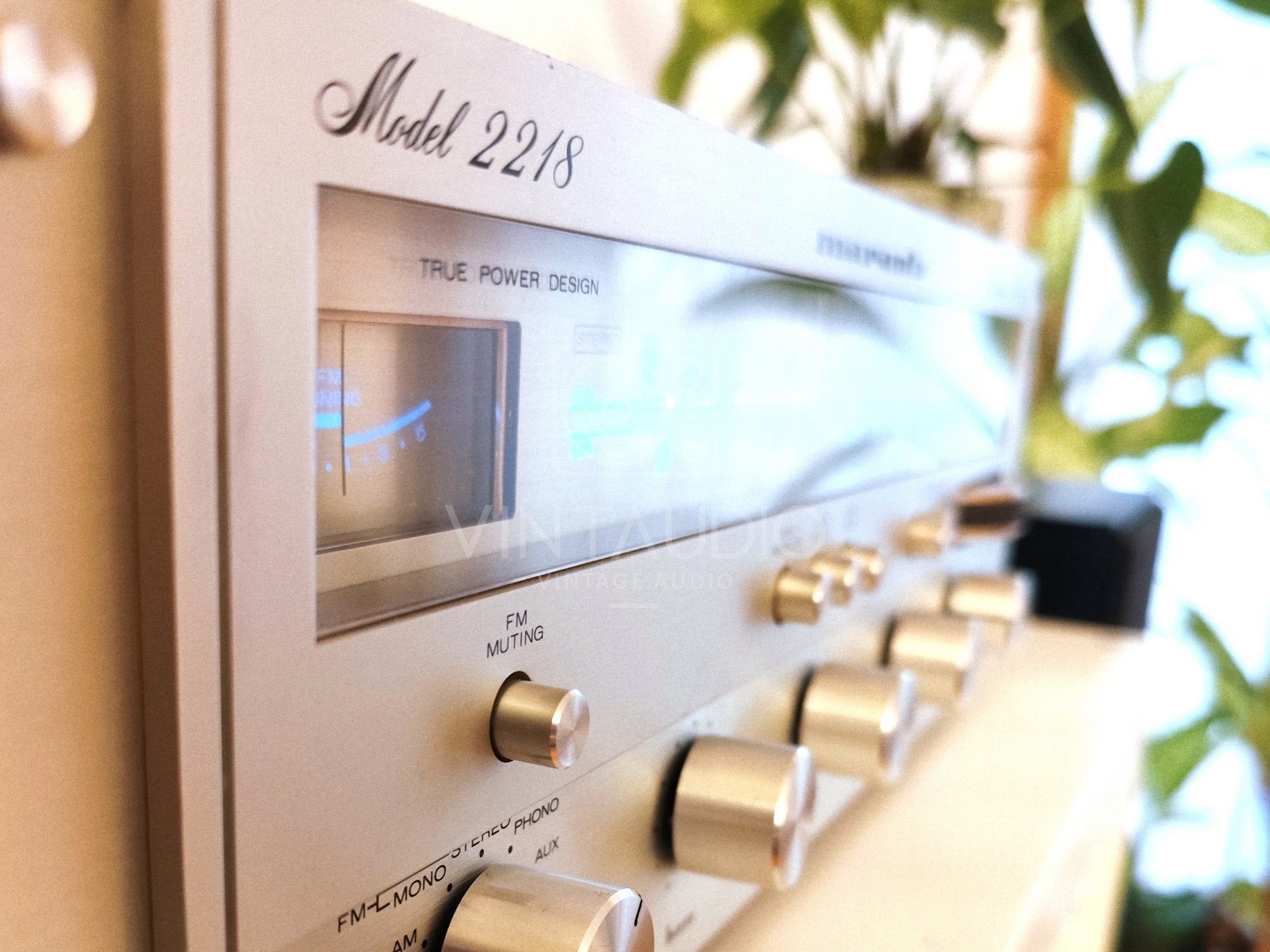
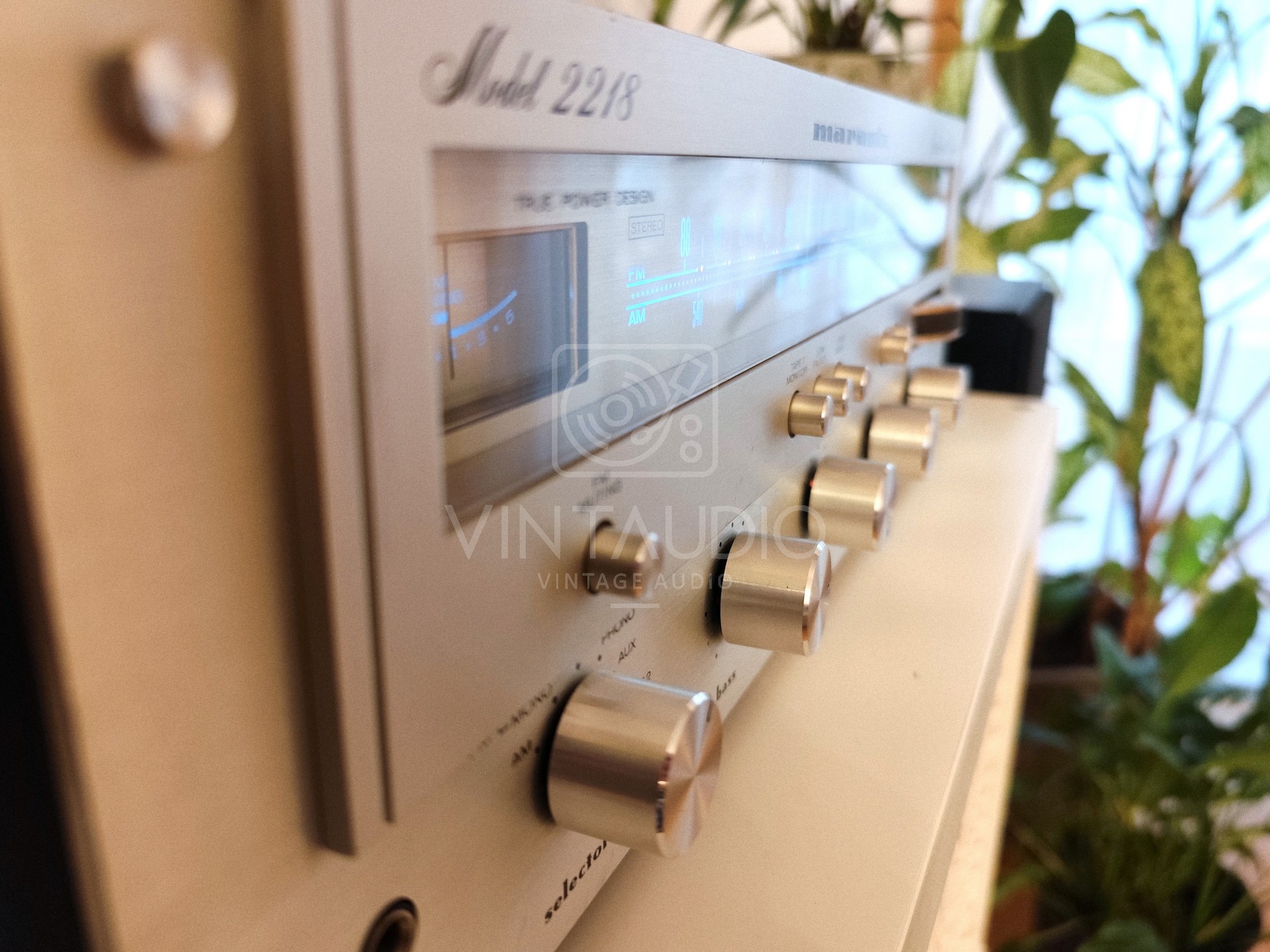
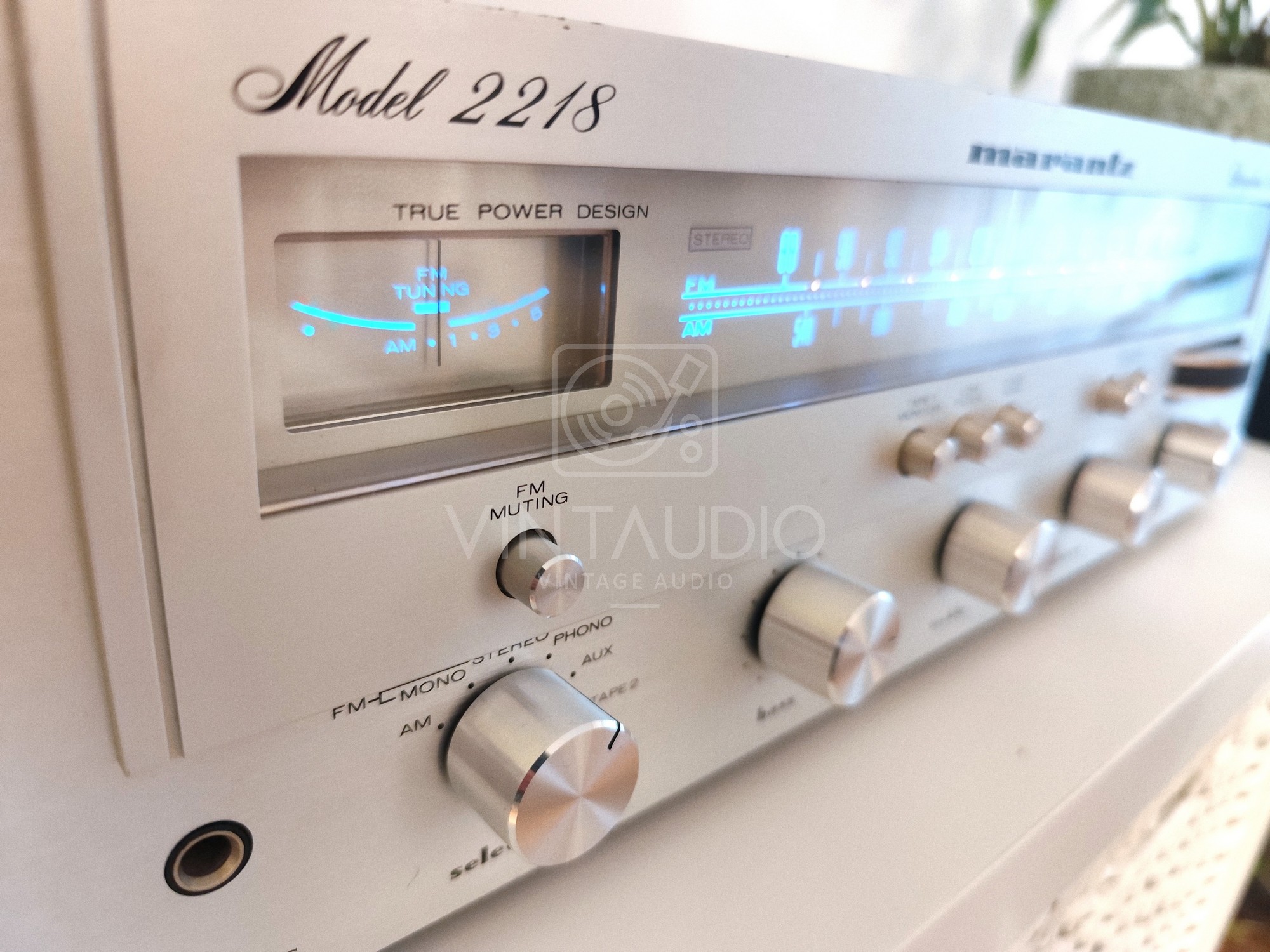
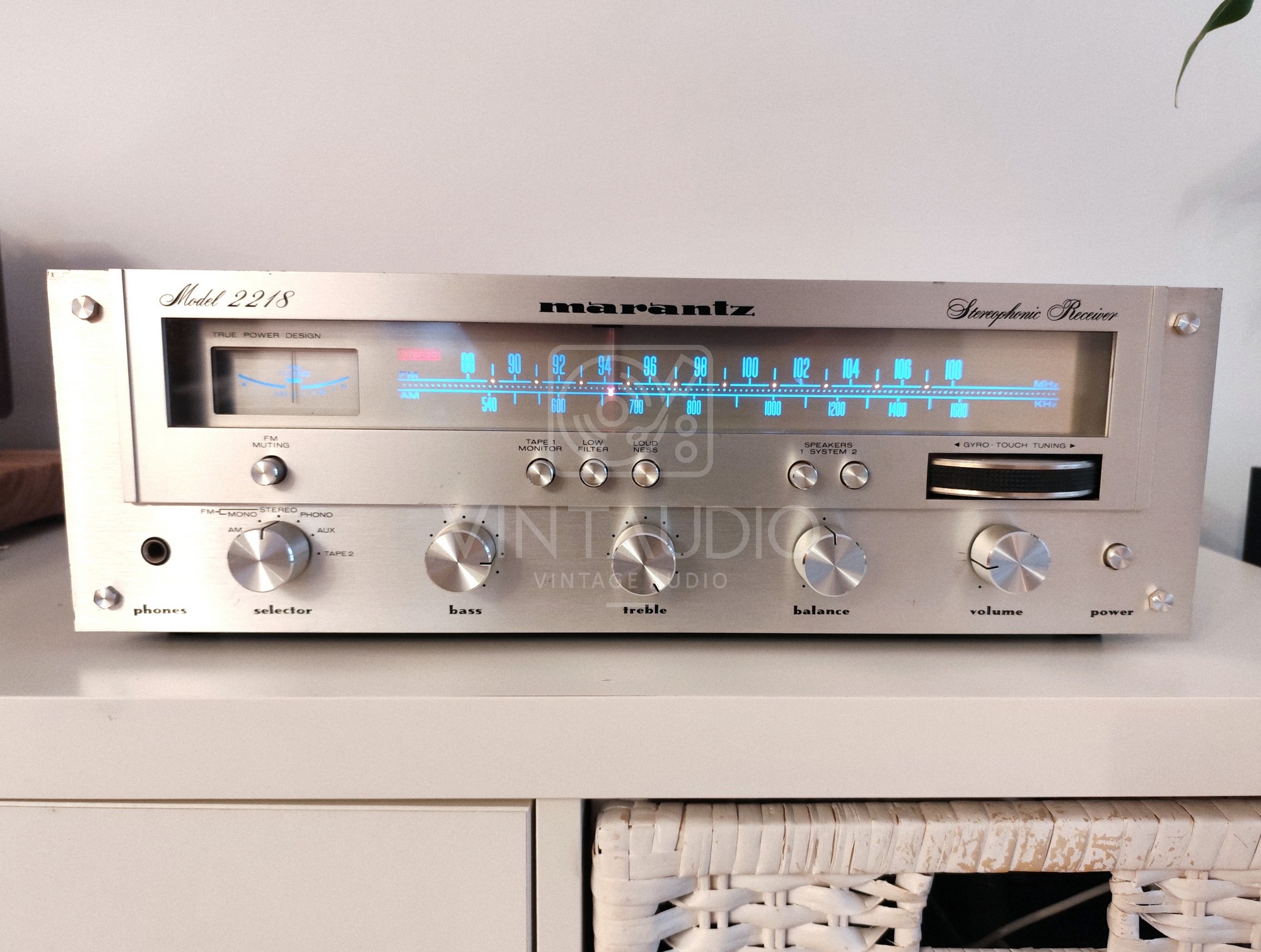
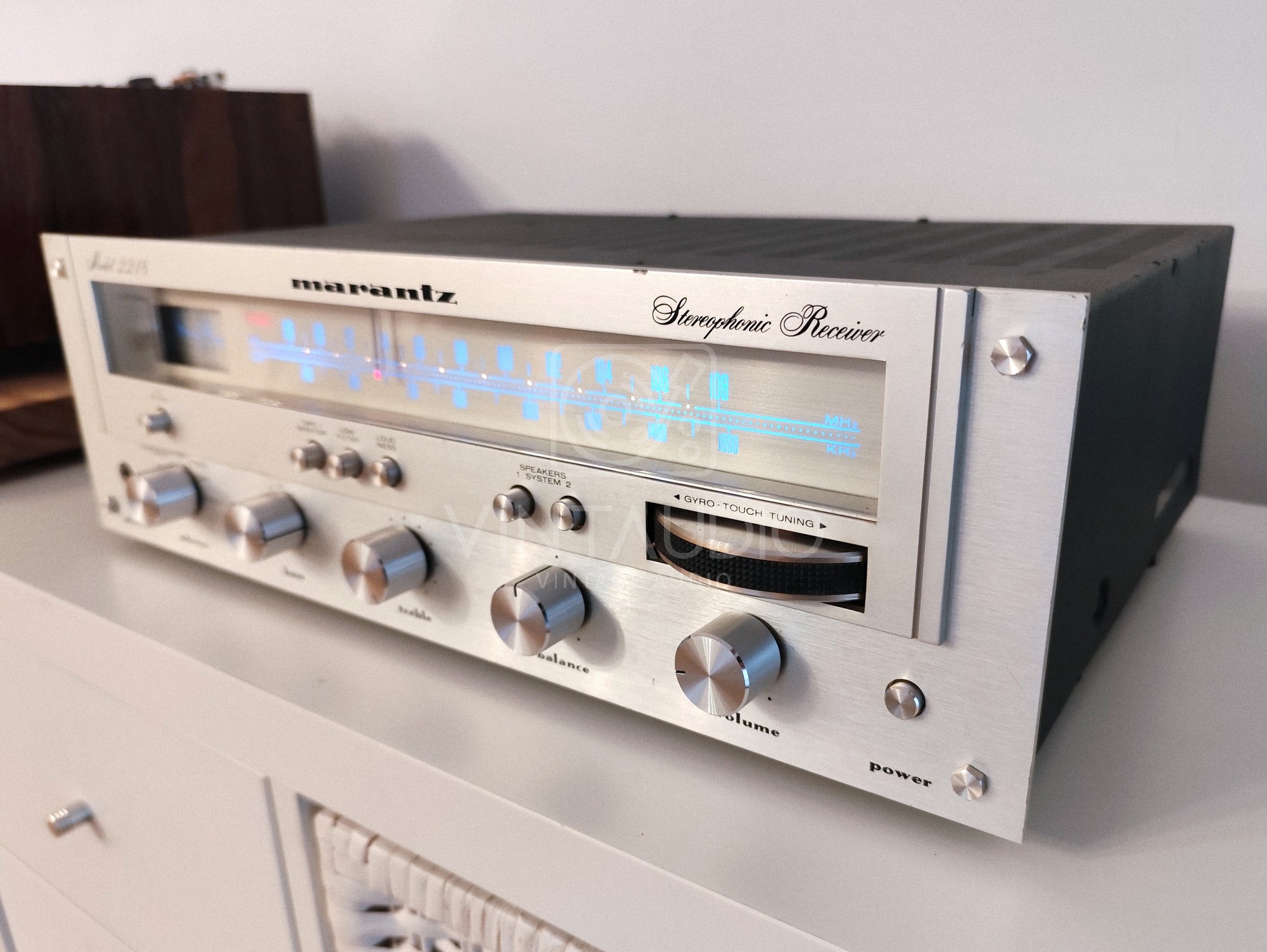
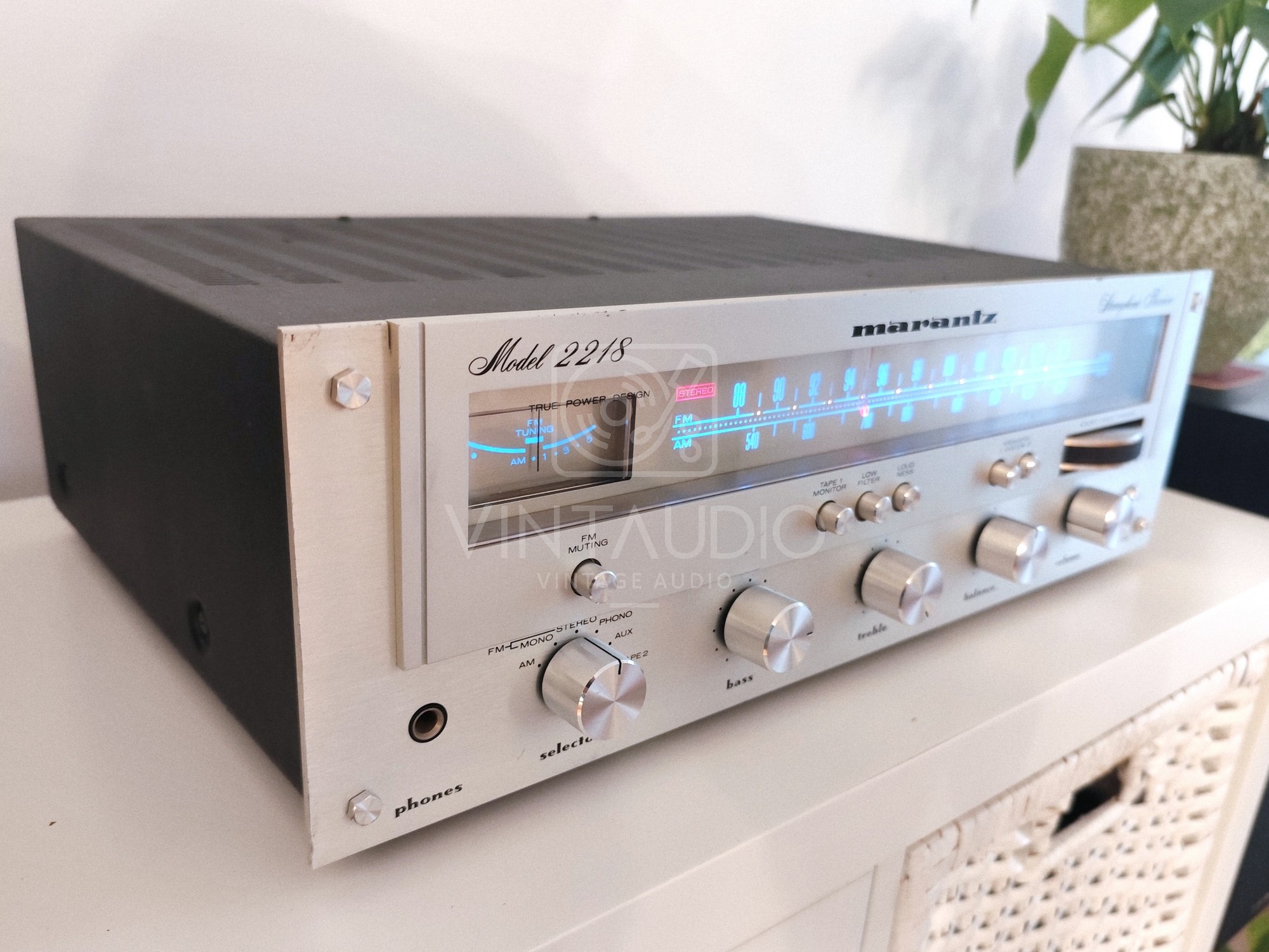
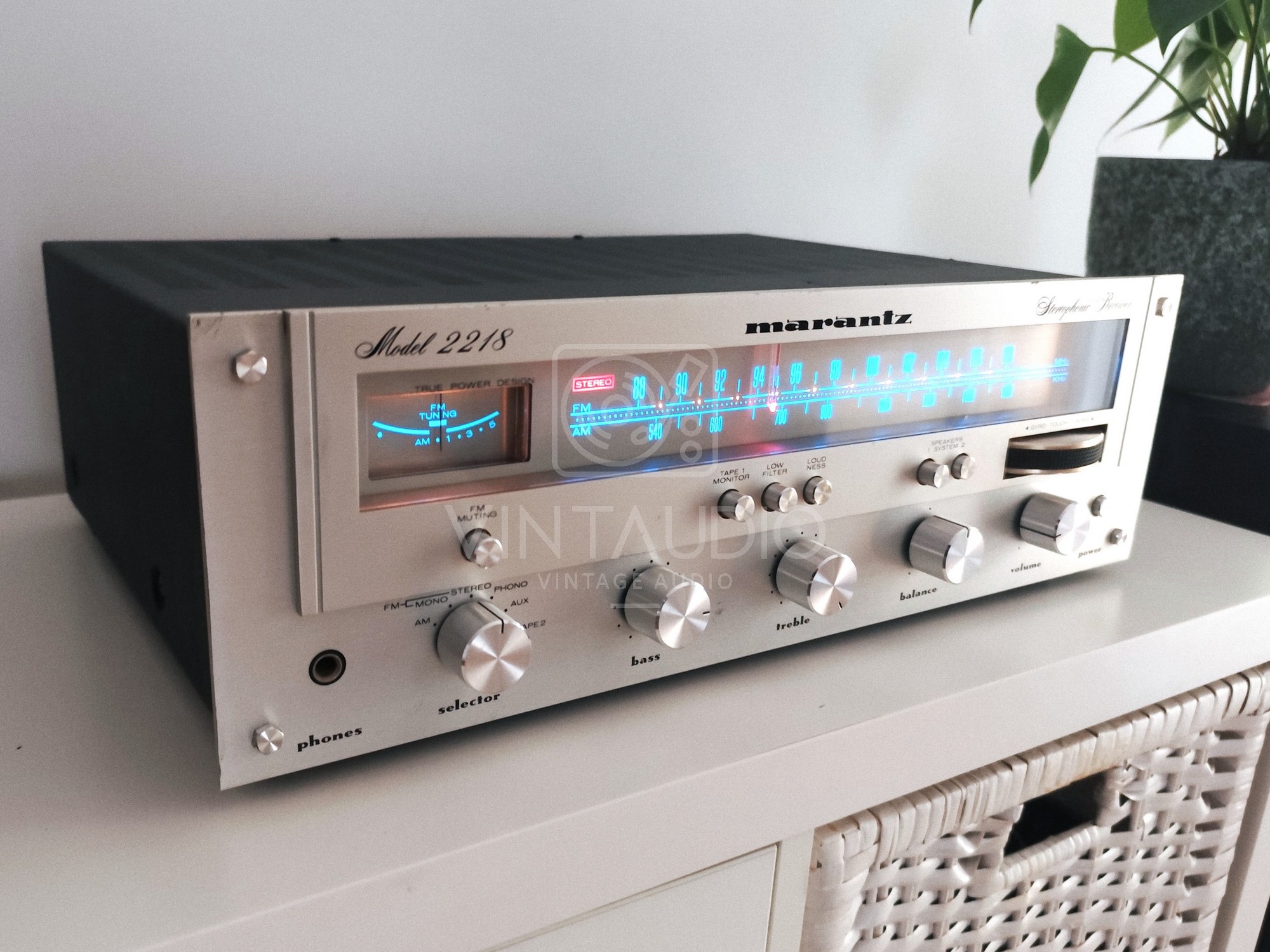
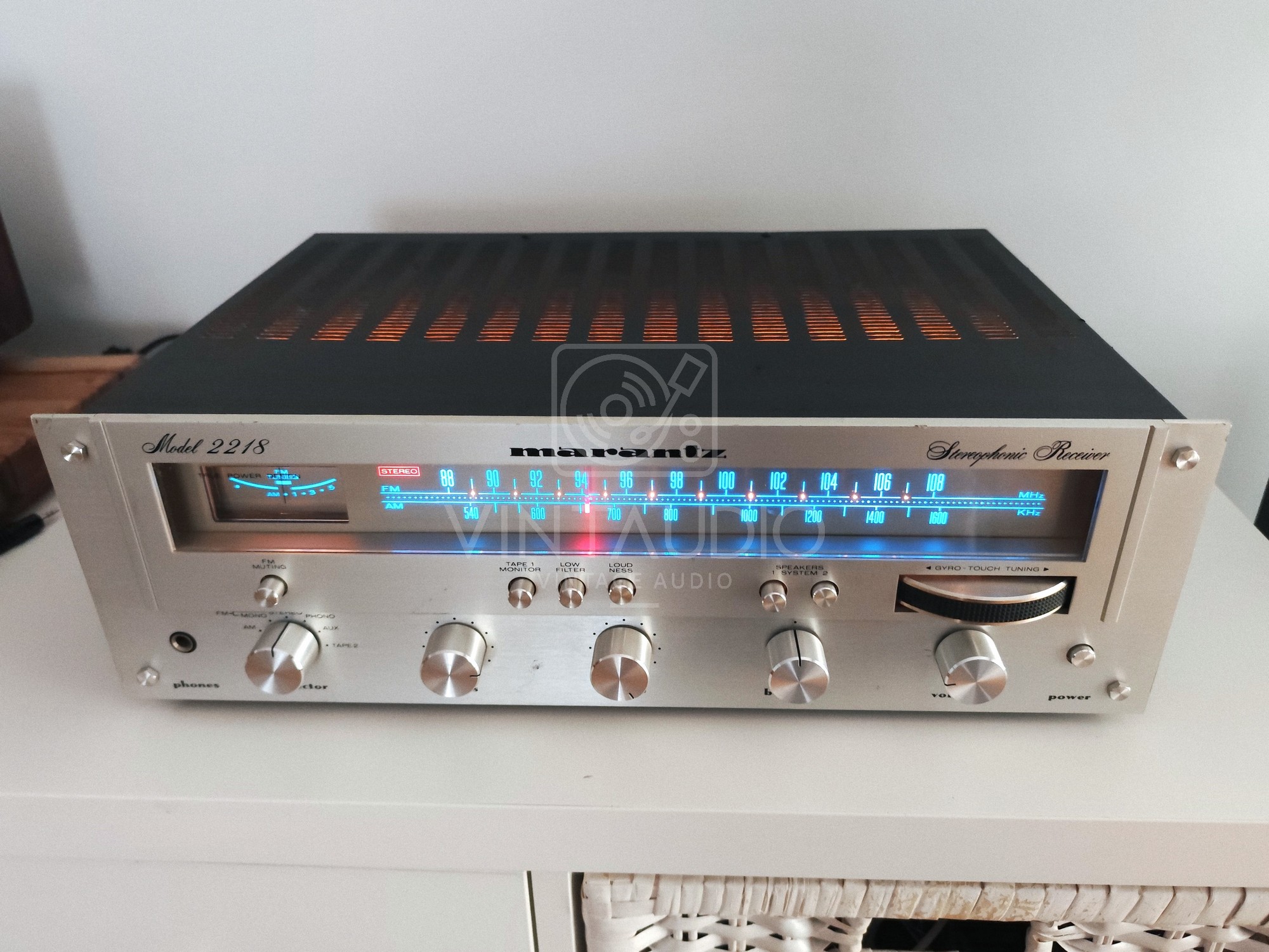
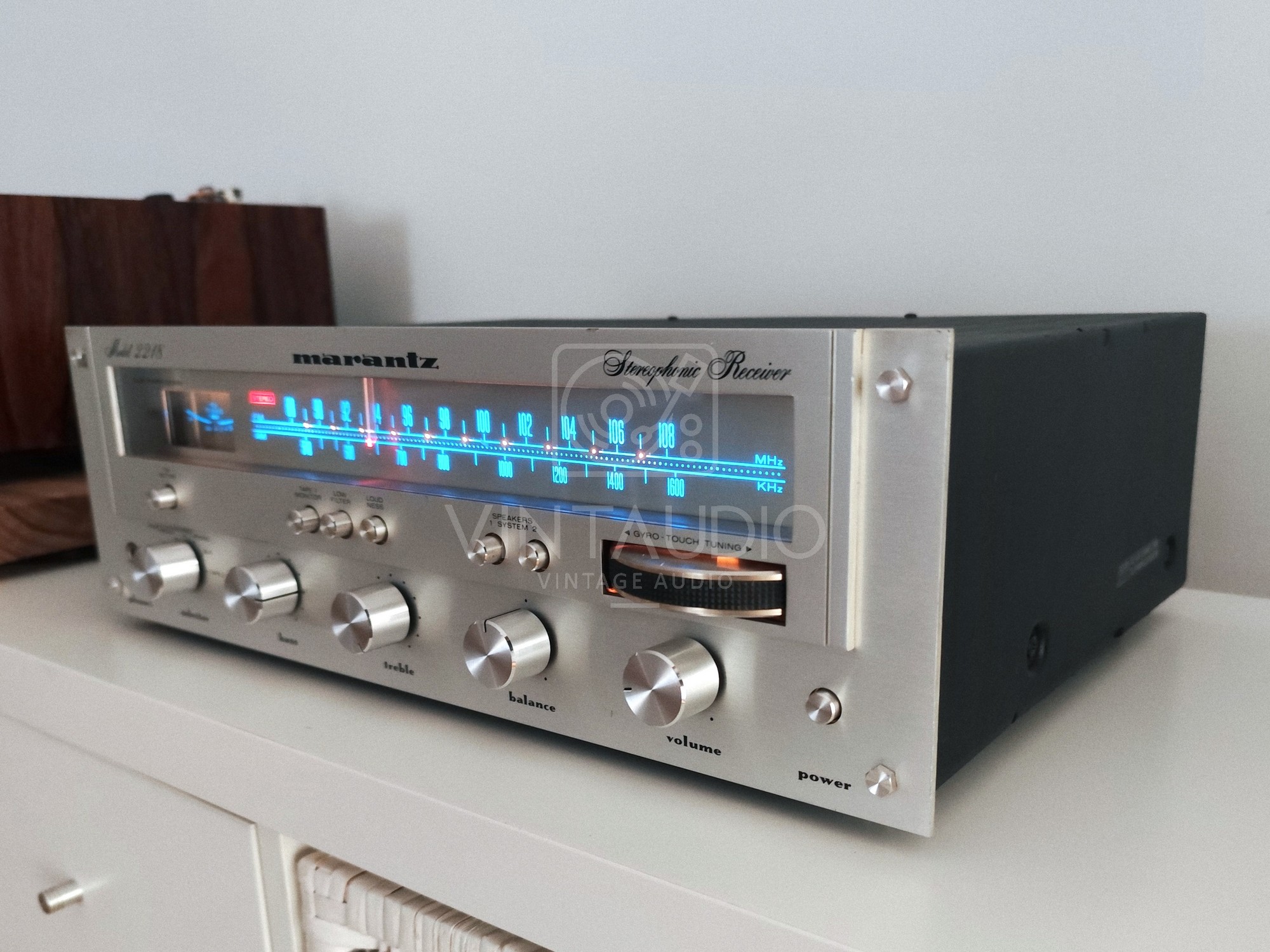
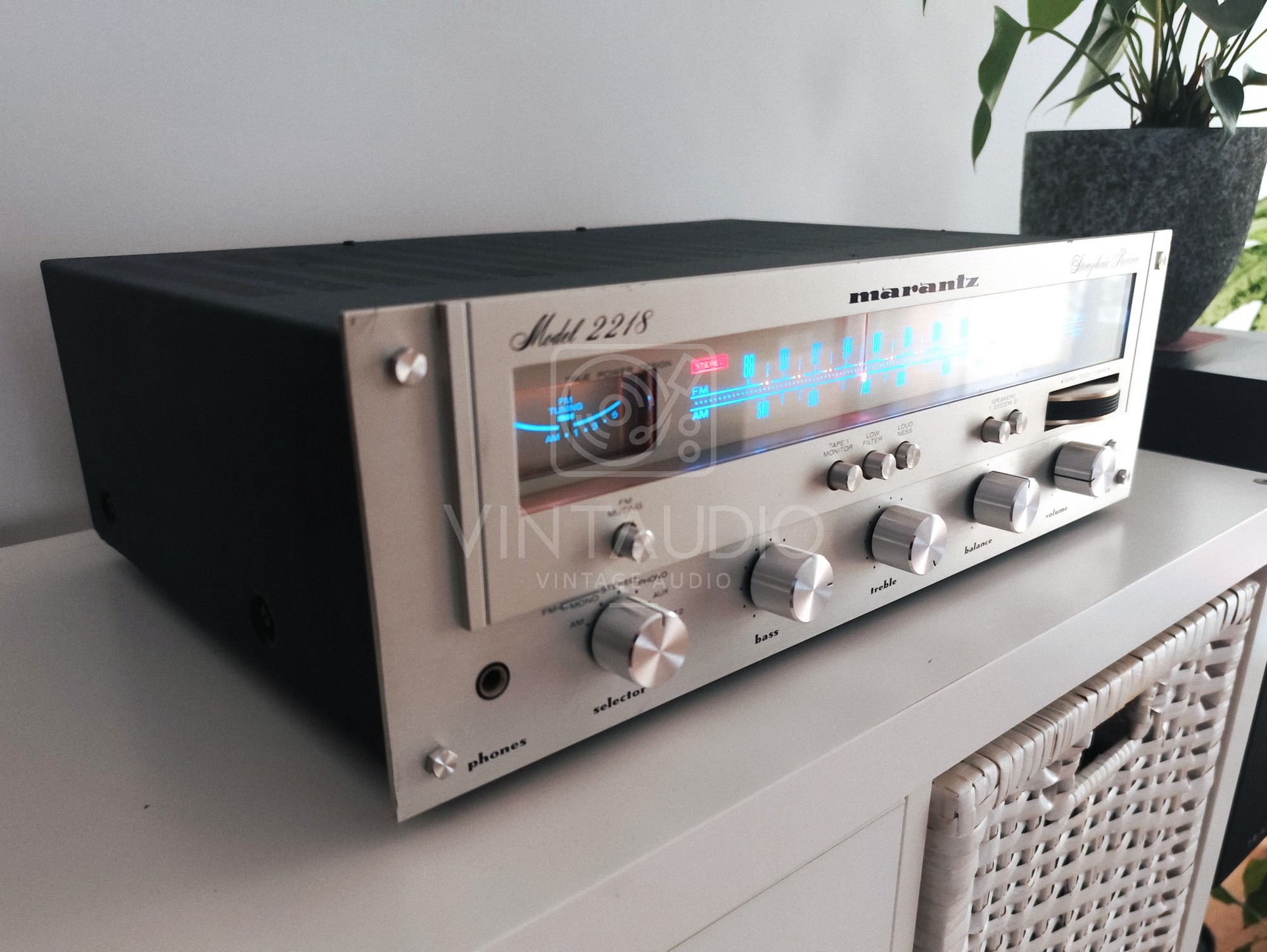
Released in 1976, the Marantz 2218 embodies the brand’s philosophy during the so-called “golden era” of Japanese hi-fi. Positioned as an entry-level model within the renowned 22xx series, this receiver demonstrates that sound quality and elegant construction were not reserved exclusively for the more powerful models.
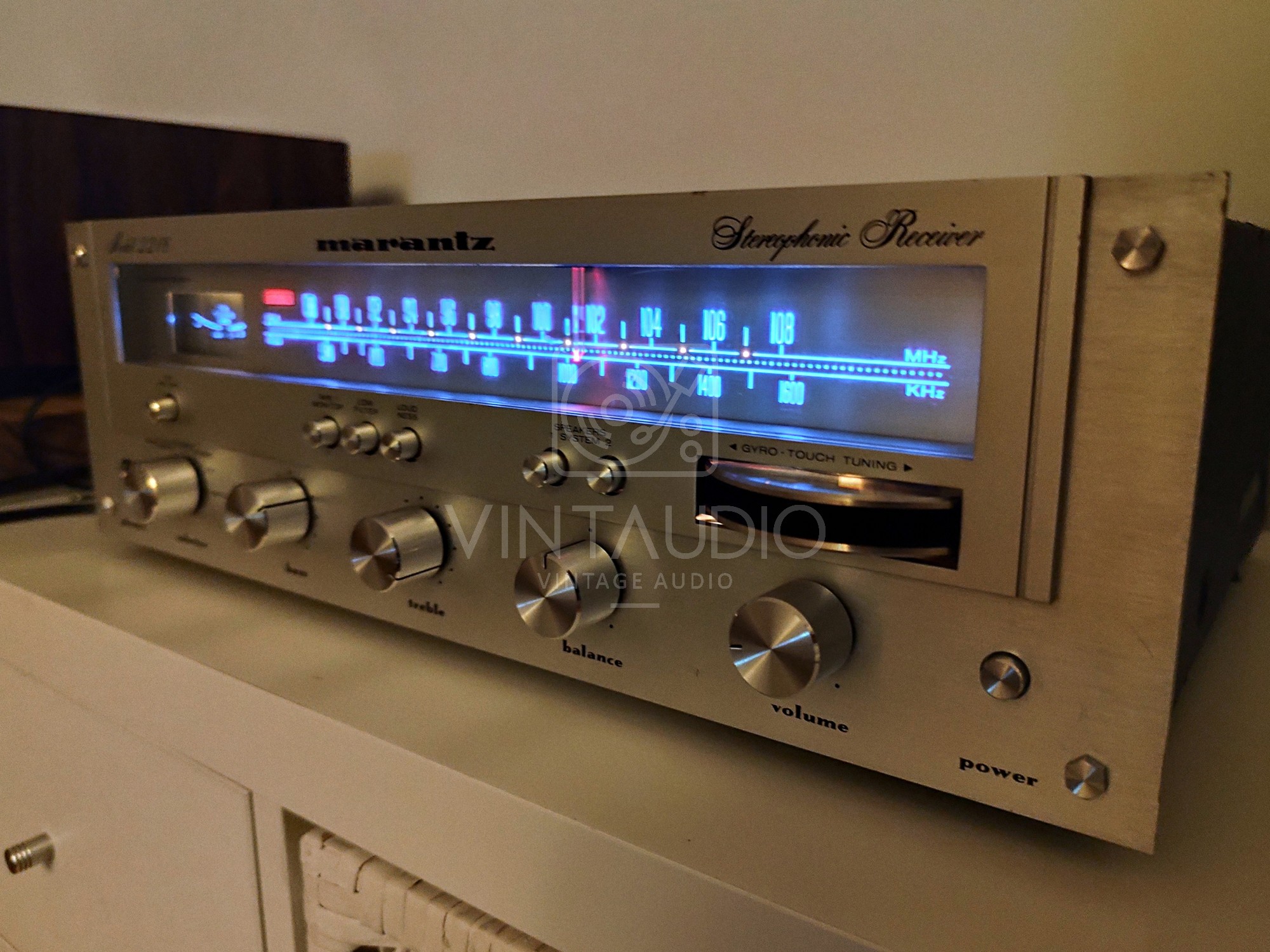
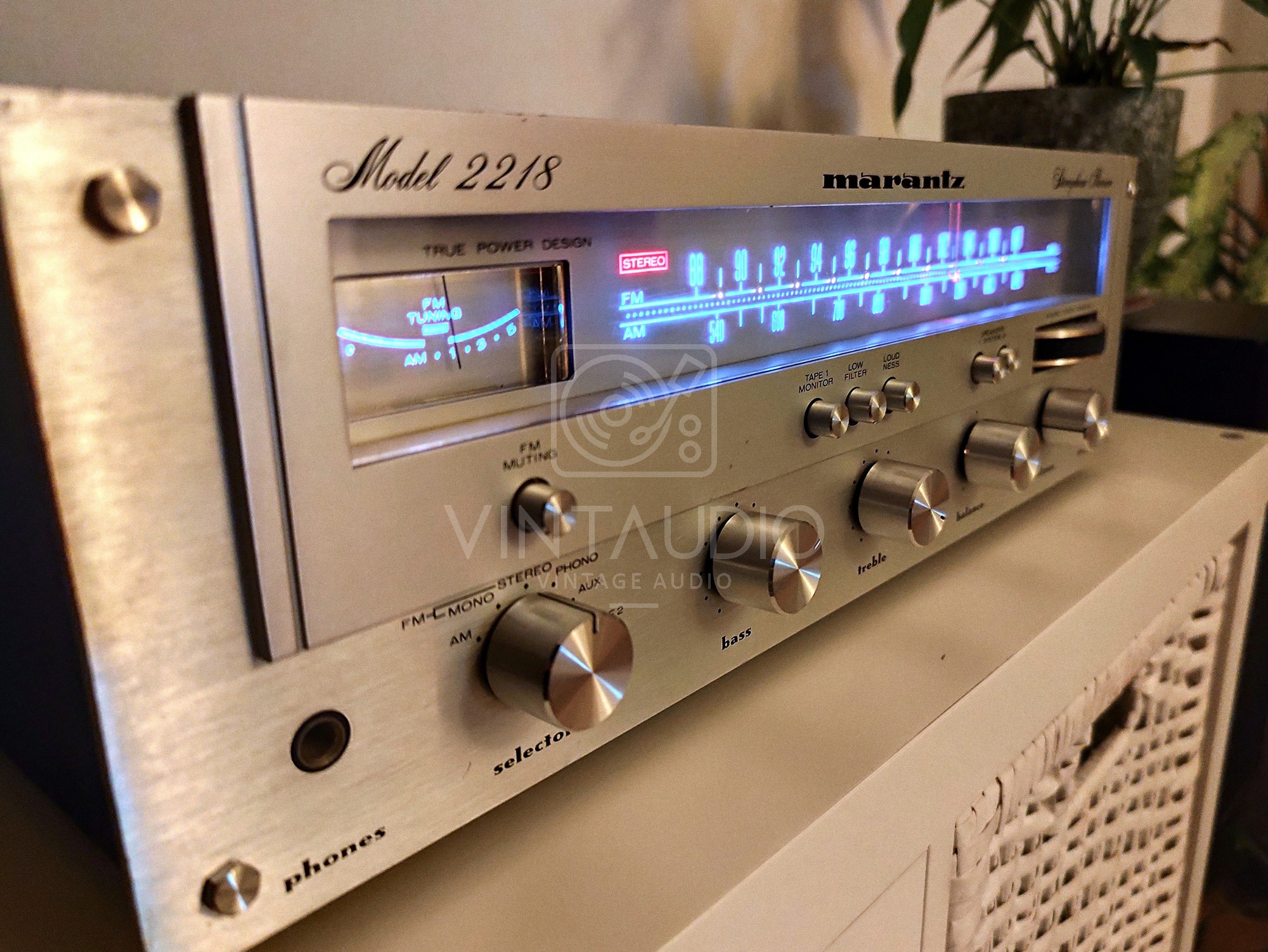
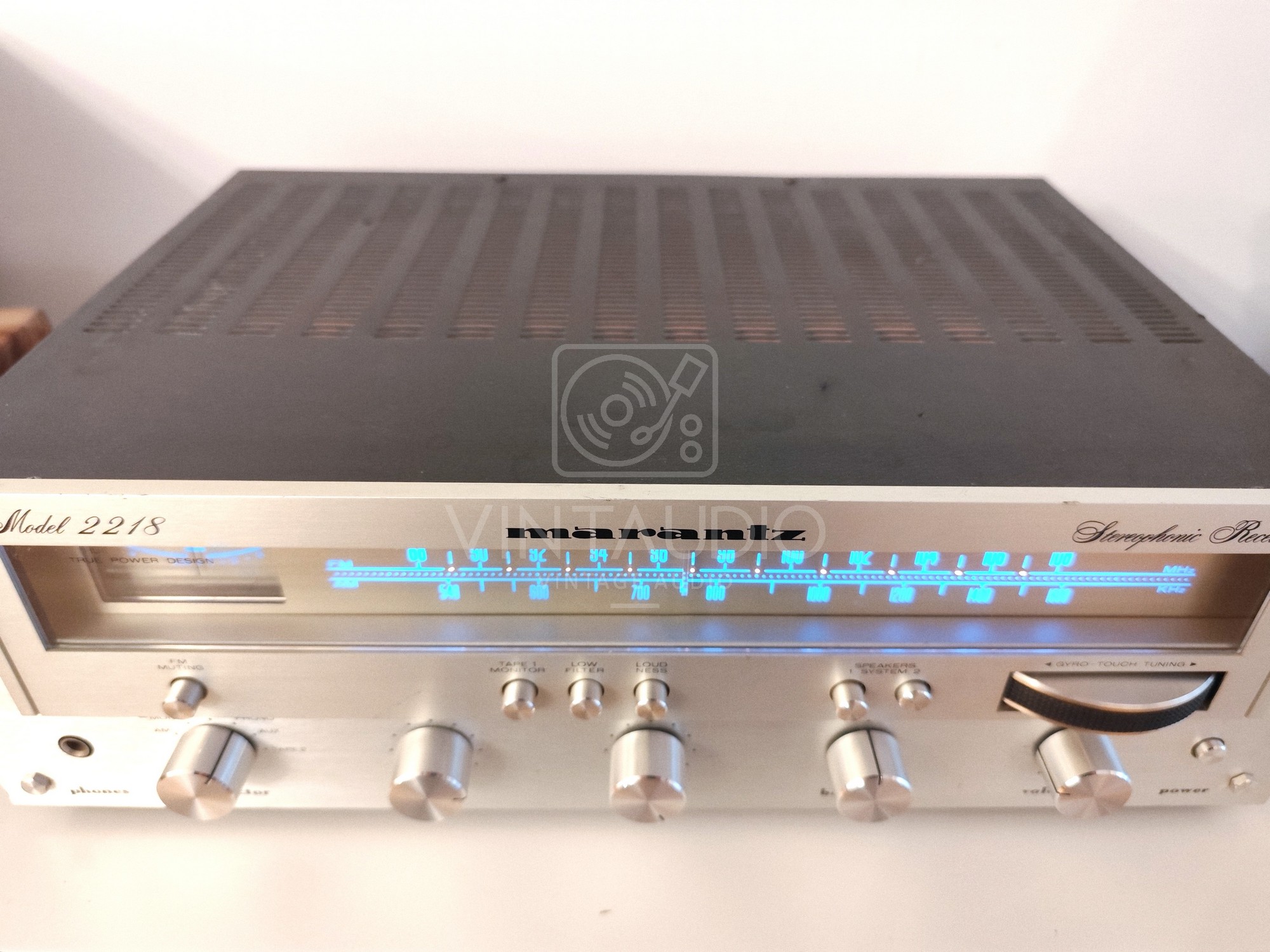
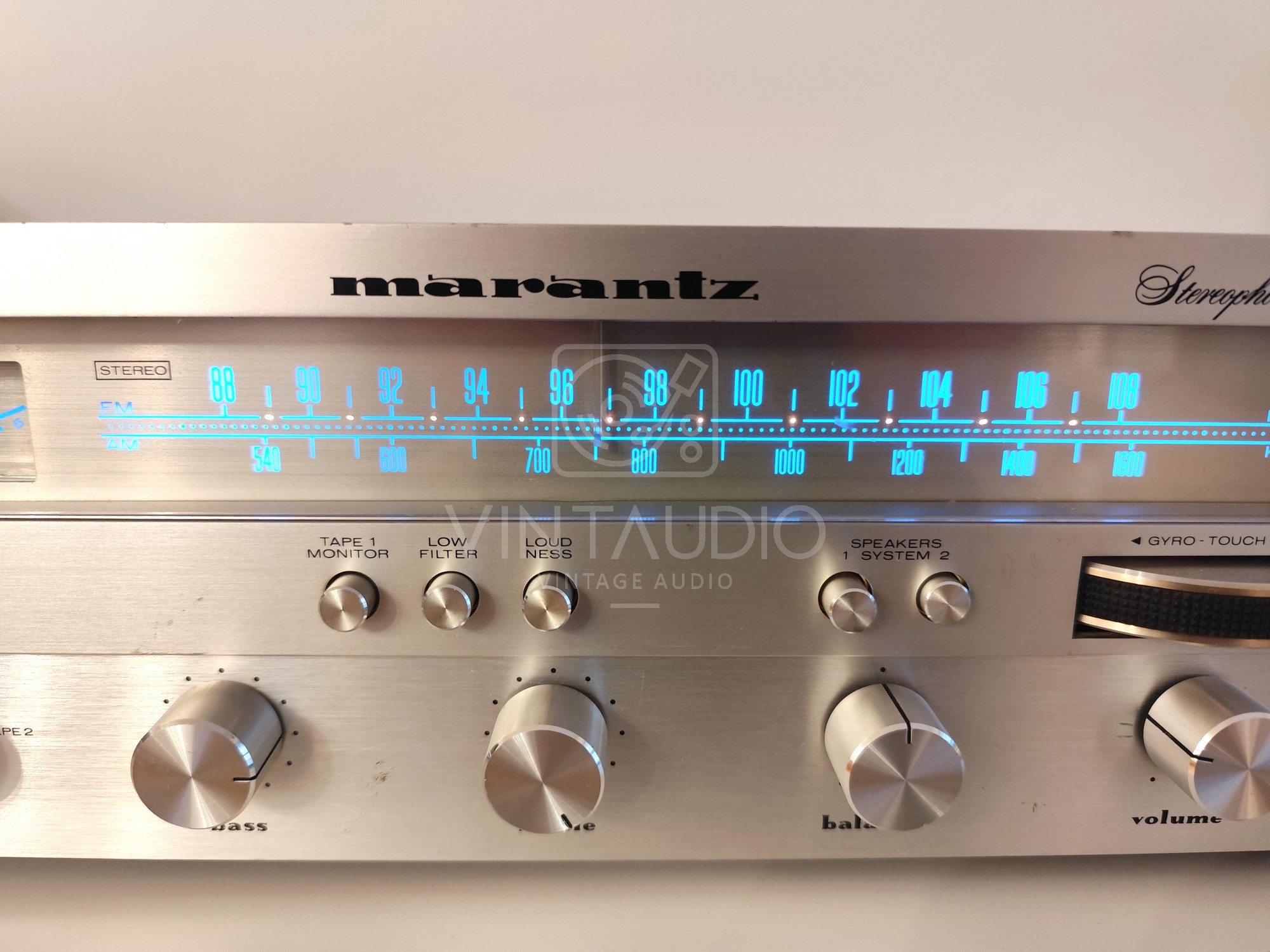
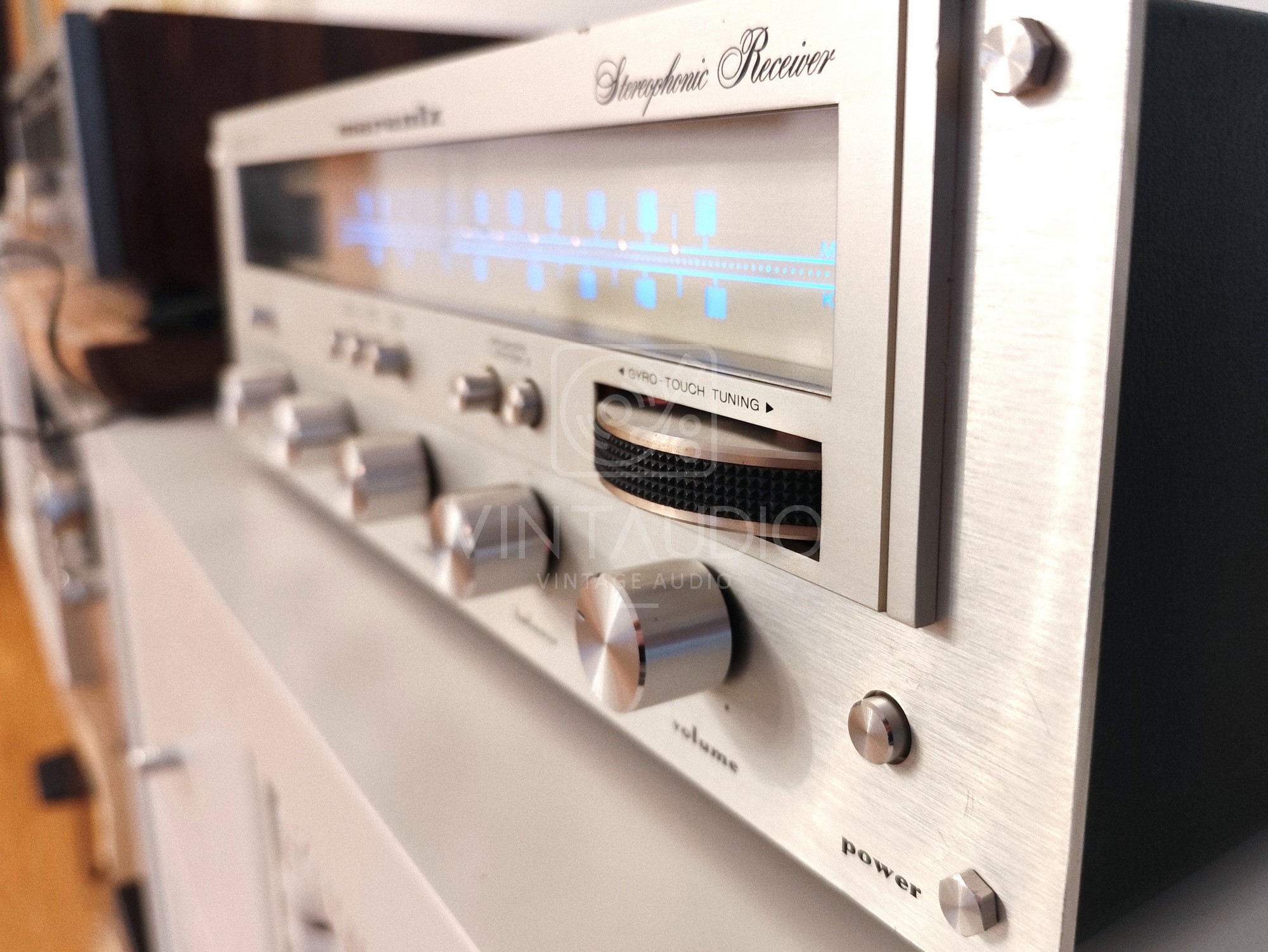
At first glance, the 2218 displays all the elements that made Marantz a reference among audiophiles and vintage audio enthusiasts. The brushed aluminum front panel and iconic blue dial illumination create a distinctive and instantly recognizable visual presence. There may be technically superior receivers, but few convey the same sense of solid build quality, refinement, and personality.
From a technical standpoint, the 2218 delivers 18 watts per channel into 8 ohms, a figure that may appear modest, yet in real-world use proves more than sufficient for demanding home listening. Based on my experience and in comparison with other equipment, these 18 watts feel considerably more generous than the specifications suggest, giving the impression of an amplifier delivering around 25 to 30 watts per channel, thanks to its current capability and the effortless way it controls loudspeakers.
As with many Marantz products from this period, the phono section deserves special mention, offering very competent performance with a clean, quiet, and pleasing sound. The FM tuner, another traditional strength of the brand, provides good sensitivity and stability.
The 2218’s sound is unmistakably “Marantz”: warm, engaging, and musical. Rich, natural midrange gives voices and acoustic instruments excellent presence, while the treble remains detailed without becoming harsh. The bass, although not overwhelming, offers excellent definition and balance.
Today, any Marantz receiver from the 22xx series is highly sought after by collectors and vintage audio enthusiasts. Combining build quality, timeless aesthetics, and the sonic signature that defined the brand’s golden era, even an entry-level model such as the 2218 possesses a unique charm. Finding a well-preserved example is an opportunity to experience a period when audio engineering valued longevity, musicality and, above all, the simple pleasure of listening to music.
Power output: 18 watts per channel into 8Ω (stereo)
Frequency response: 20Hz to 20kHz
Total harmonic distortion: 0.08%
Damping factor: 40
Input sensitivity: 2.5mV (MM), 180mV (line)
Signal to noise ratio: 74dB (MM), 85dB (line)
Output: 525mV (line)
Speaker load impedance: 4Ω (minimum)
Dimensions: 440 x 137 x 293mm
Weight: 10.5kg
Year: 1978