
Optonica was introduced in 1976 by Sharp Corporation as its premium high-fidelity division, created to compete directly with the most respected Japanese audio manufacturers of the era. While Sharp was already well known for its consumer electronics, Optonica was dedicated to producing audiophile-grade equipment distinguished by advanced engineering, elegant design, and exceptional build quality.
Throughout the late 1970s and early 1980s, Optonica established a strong reputation for manufacturing amplifiers, tuners, cassette decks, and turntables that combined innovative technology with refined styling. Although the brand’s lifespan was relatively short, its products remain highly regarded by collectors and vintage audio enthusiasts for their reliability, performance, and distinctive appearance.
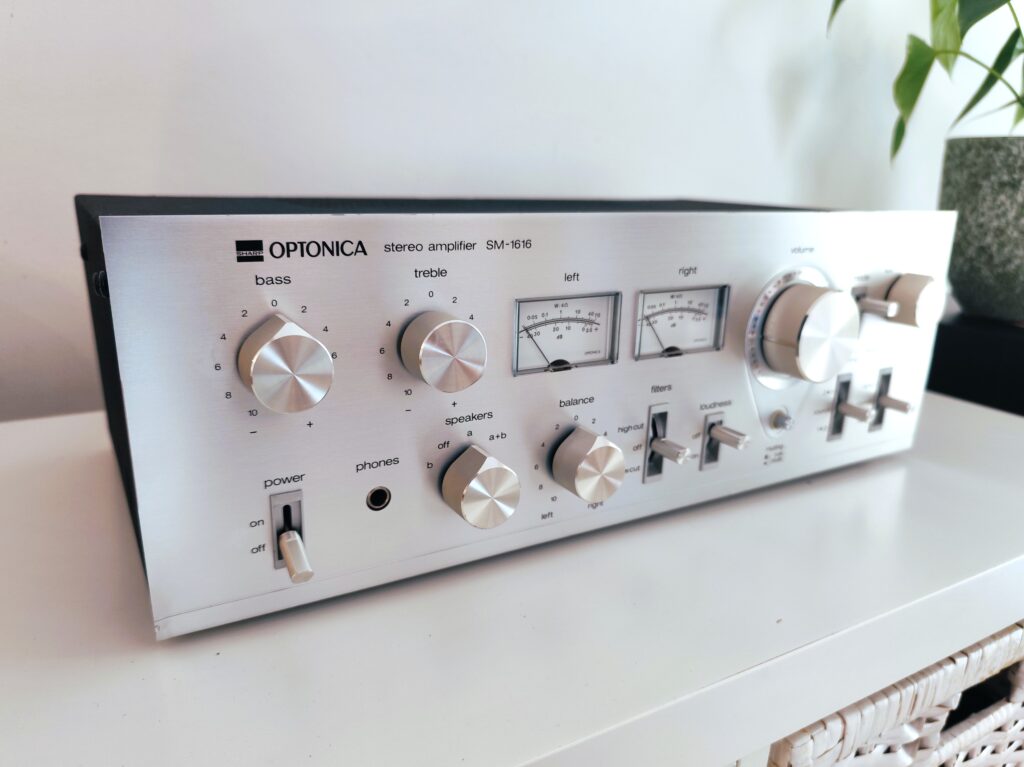
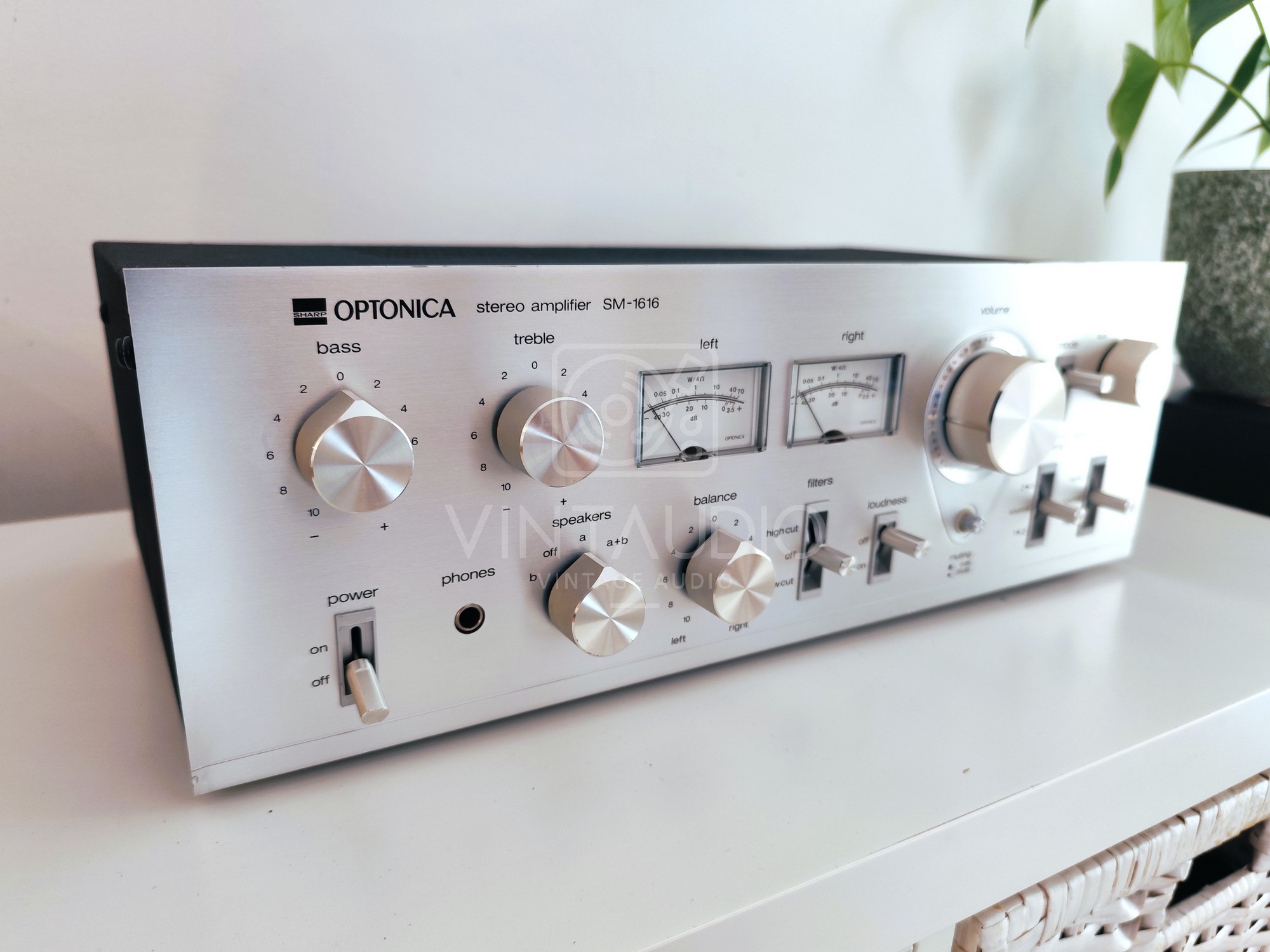
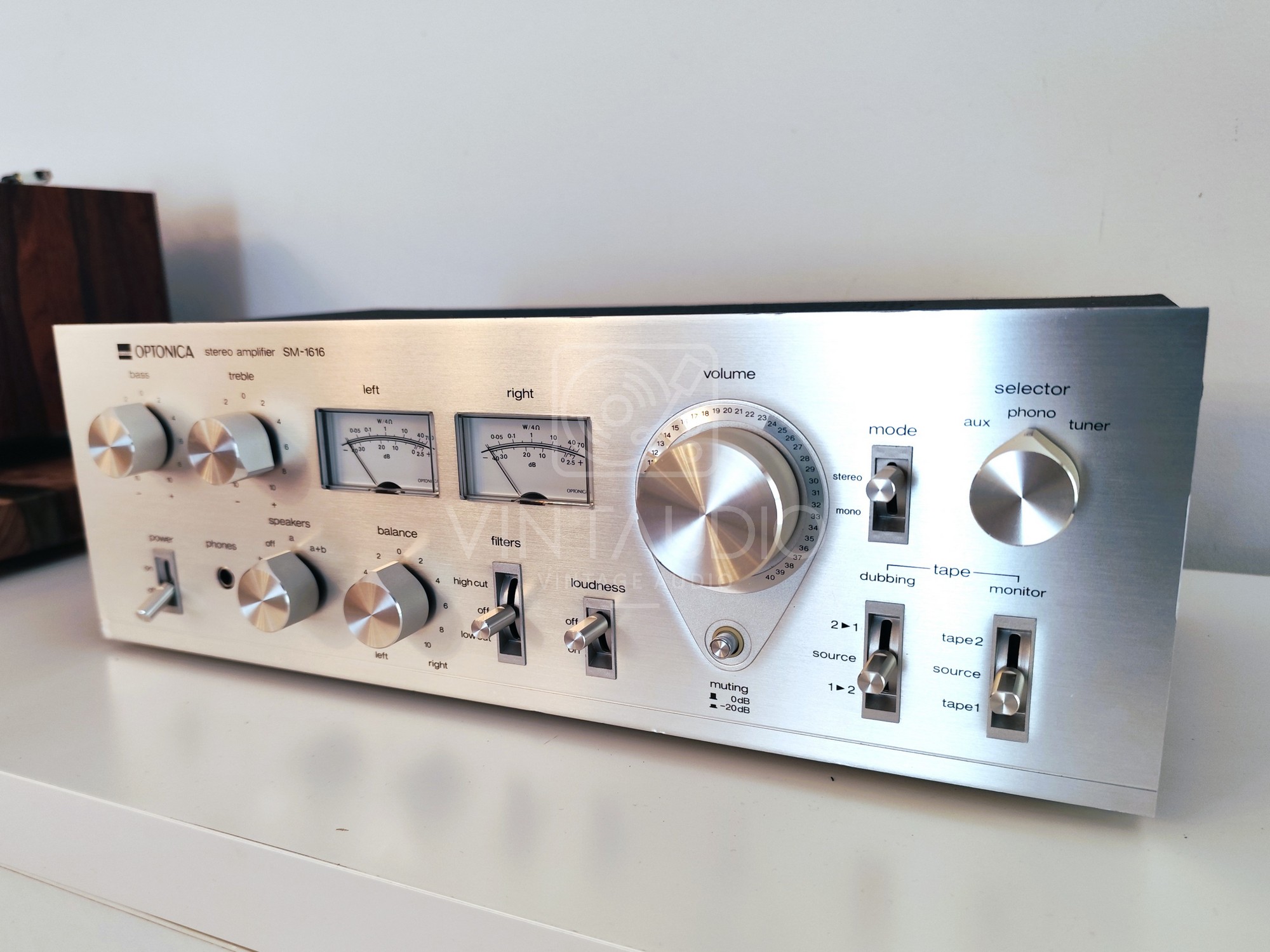
Among the most appreciated integrated amplifiers in the range is the Optonica SM-1616, a model that perfectly represents the brand’s philosophy of delivering musical performance, engineering excellence, and long-term reliability.
Introduced during the golden age of Japanese hi-fi, the SM-1616 was designed at a time when manufacturers competed not only through specifications but also through component quality and construction standards. The amplifier features a robust power supply, carefully selected components, and a well-executed circuit design aimed at delivering clean and controlled sound reproduction.
Rated at 40 watts per channel into 8 ohms, the SM-1616 may appear modest on paper compared to some of its larger contemporaries. However, like many quality Japanese amplifiers of the period, its conservatively rated output and well-designed power supply allow it to drive a wide range of loudspeakers with confidence and authority.
The amplifier offers a frequency response of 15 Hz to 60 kHz, a total harmonic distortion rating of just 0.2%, and a damping factor of 40, specifications that demonstrate Optonica’s commitment to accurate and controlled audio reproduction. Its sonic character is often described as smooth and musical, with a detailed midrange, refined treble, and solid bass performance.
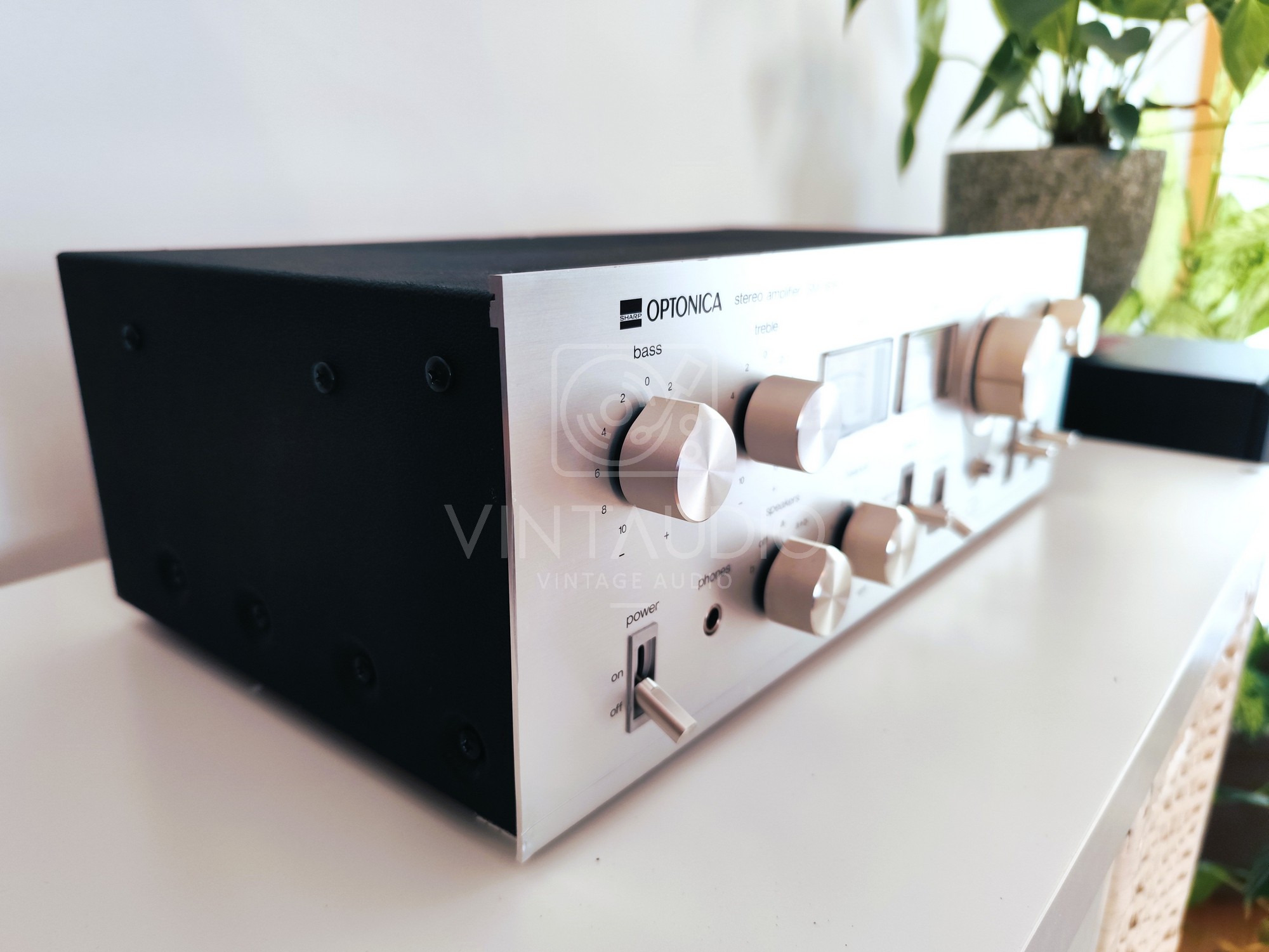
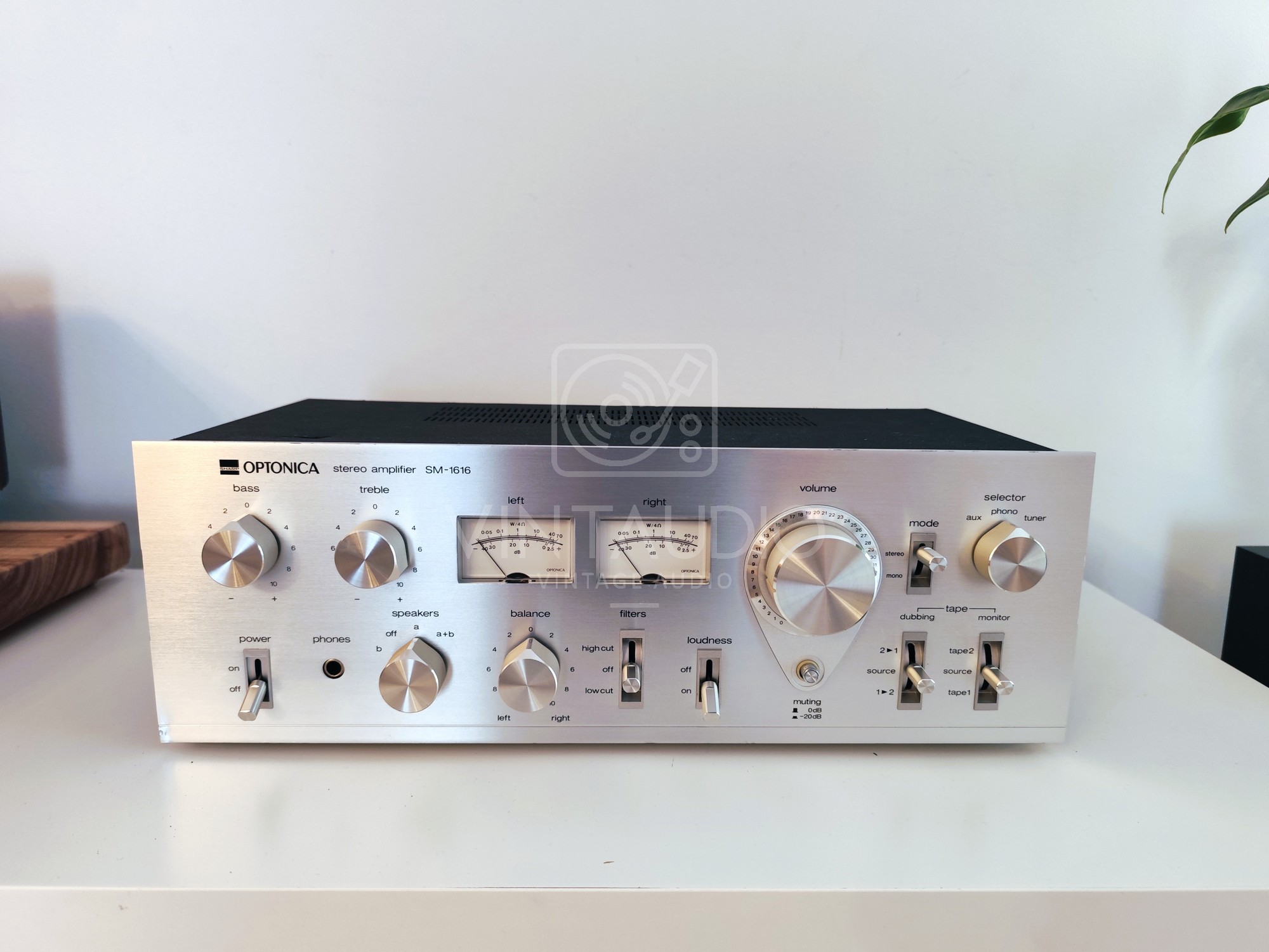
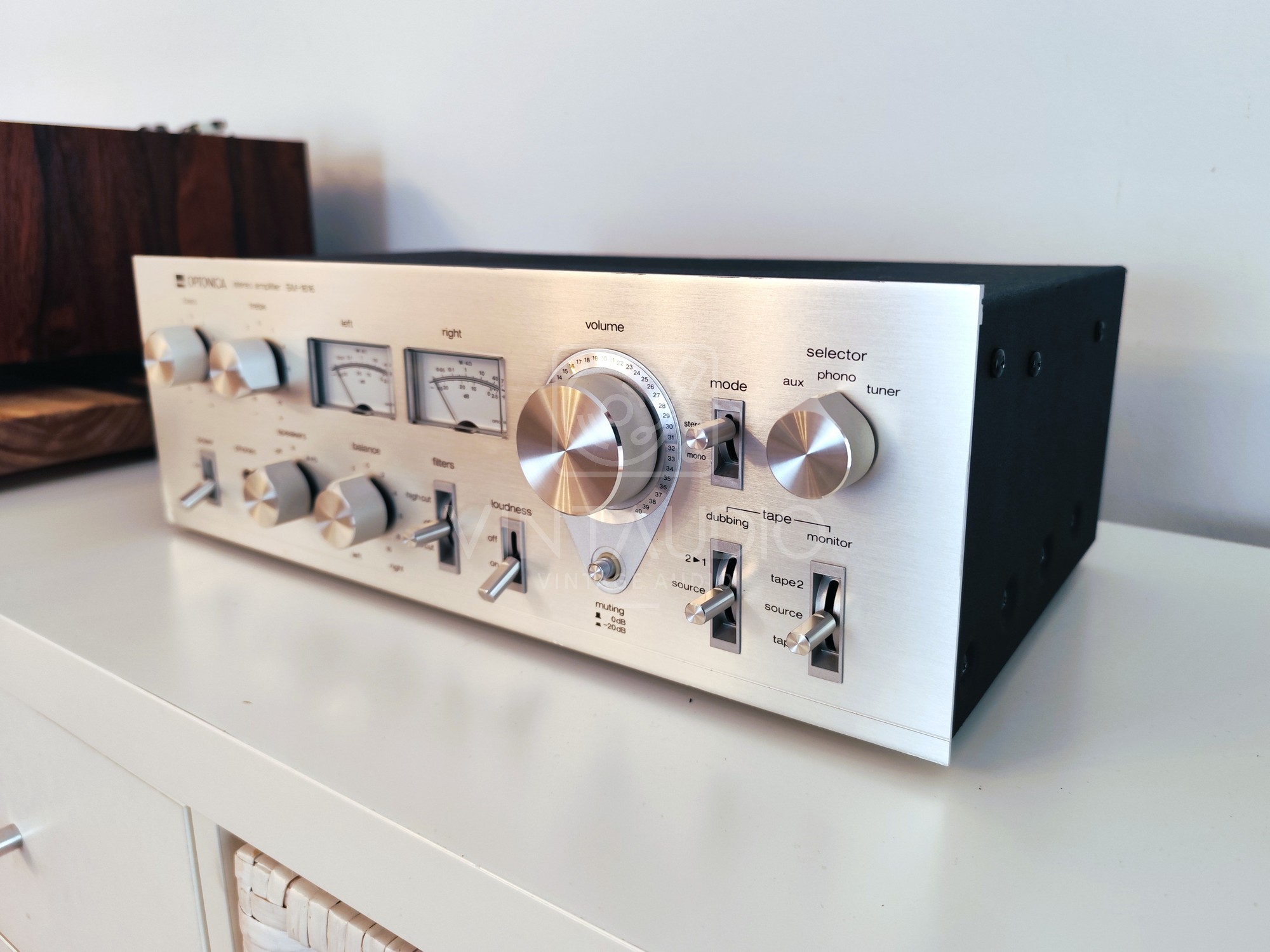
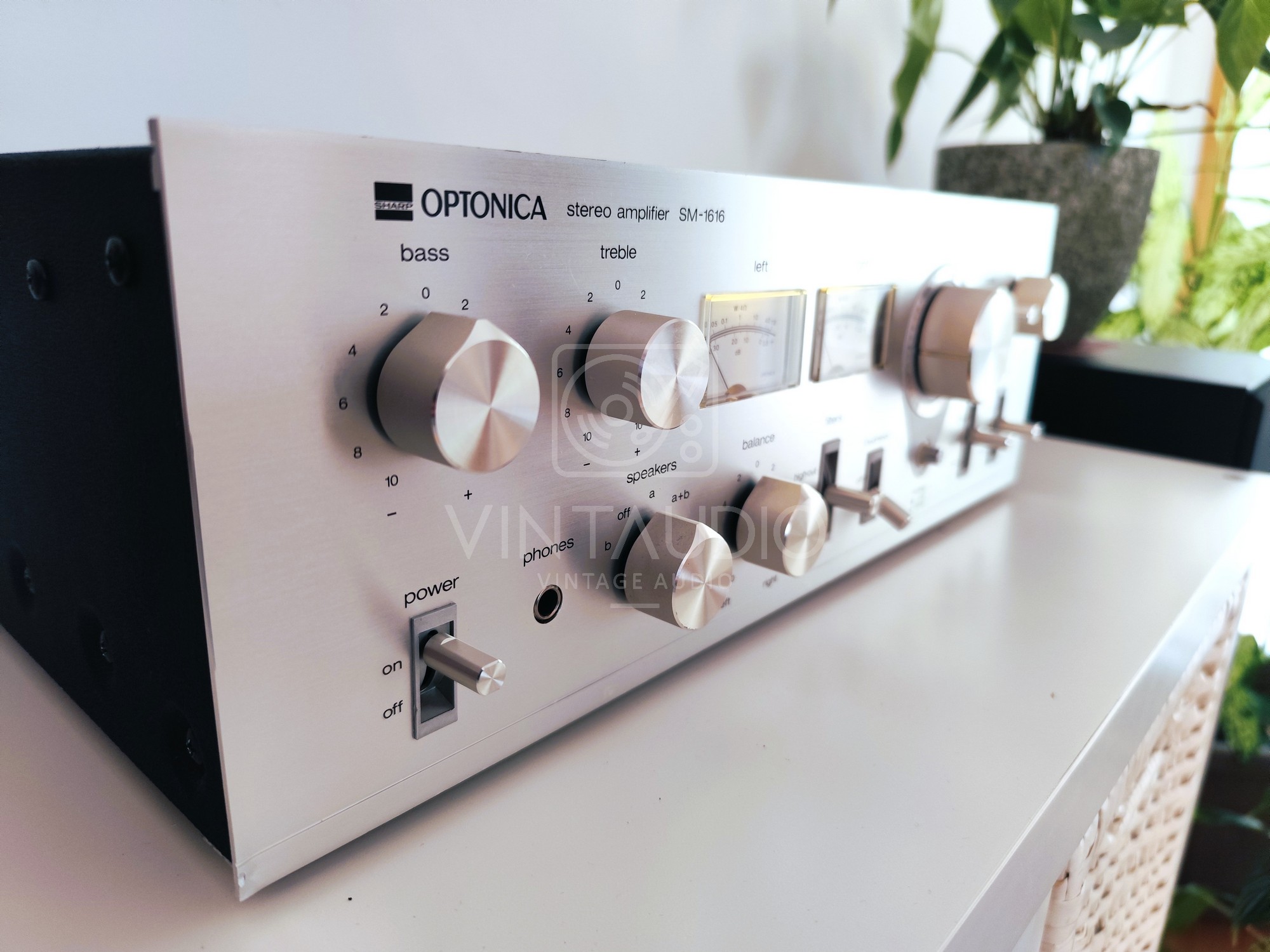
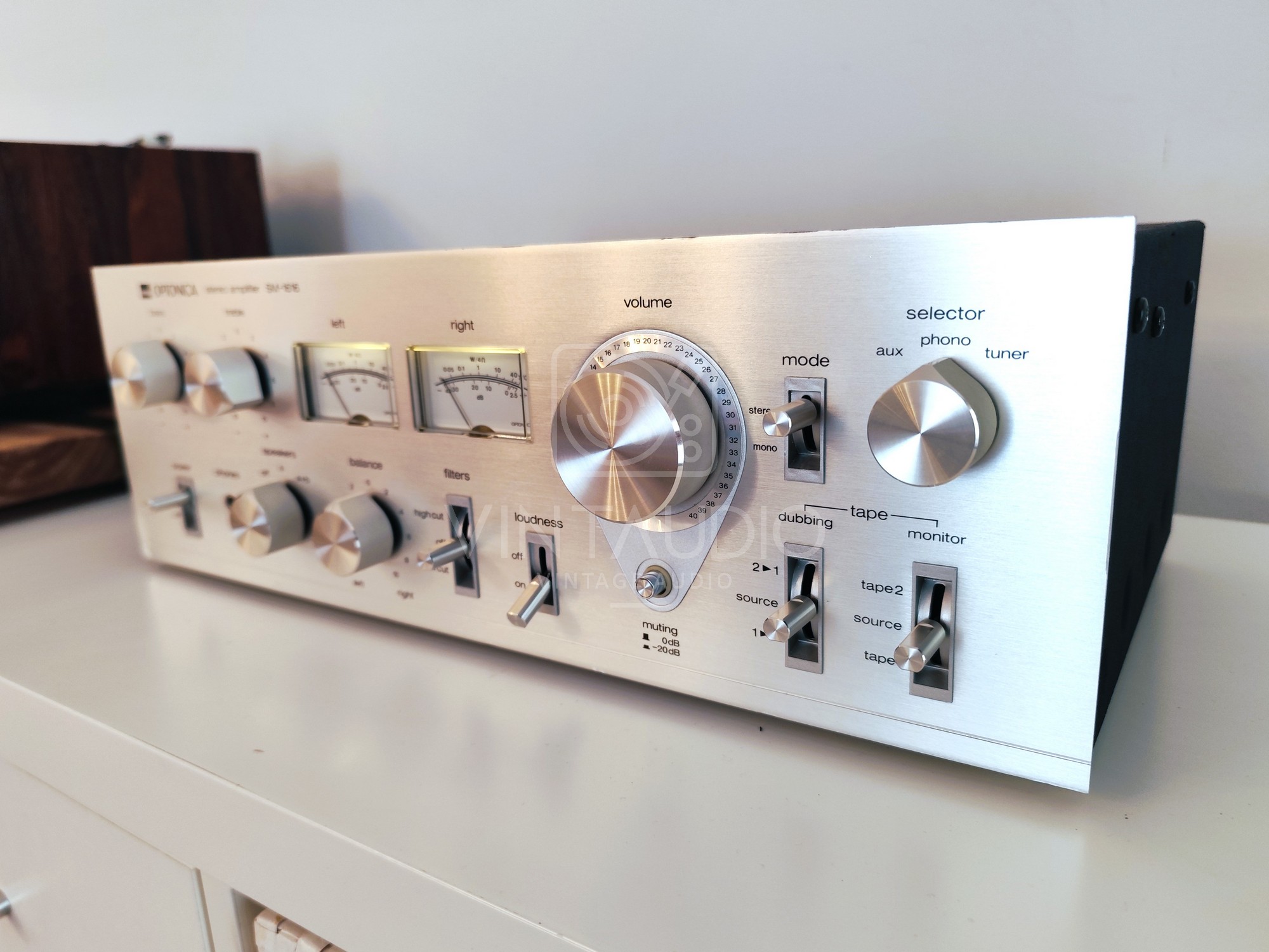
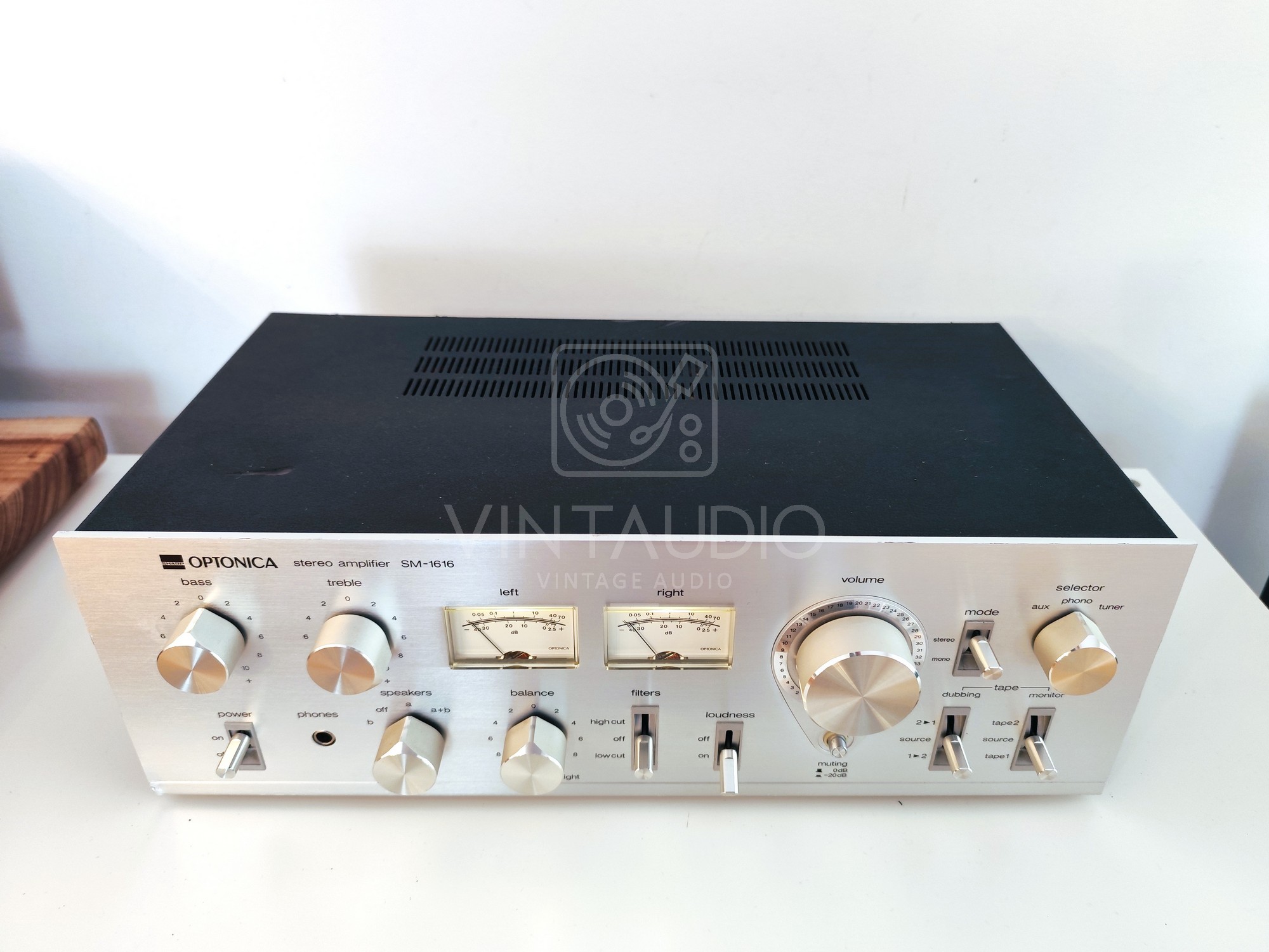
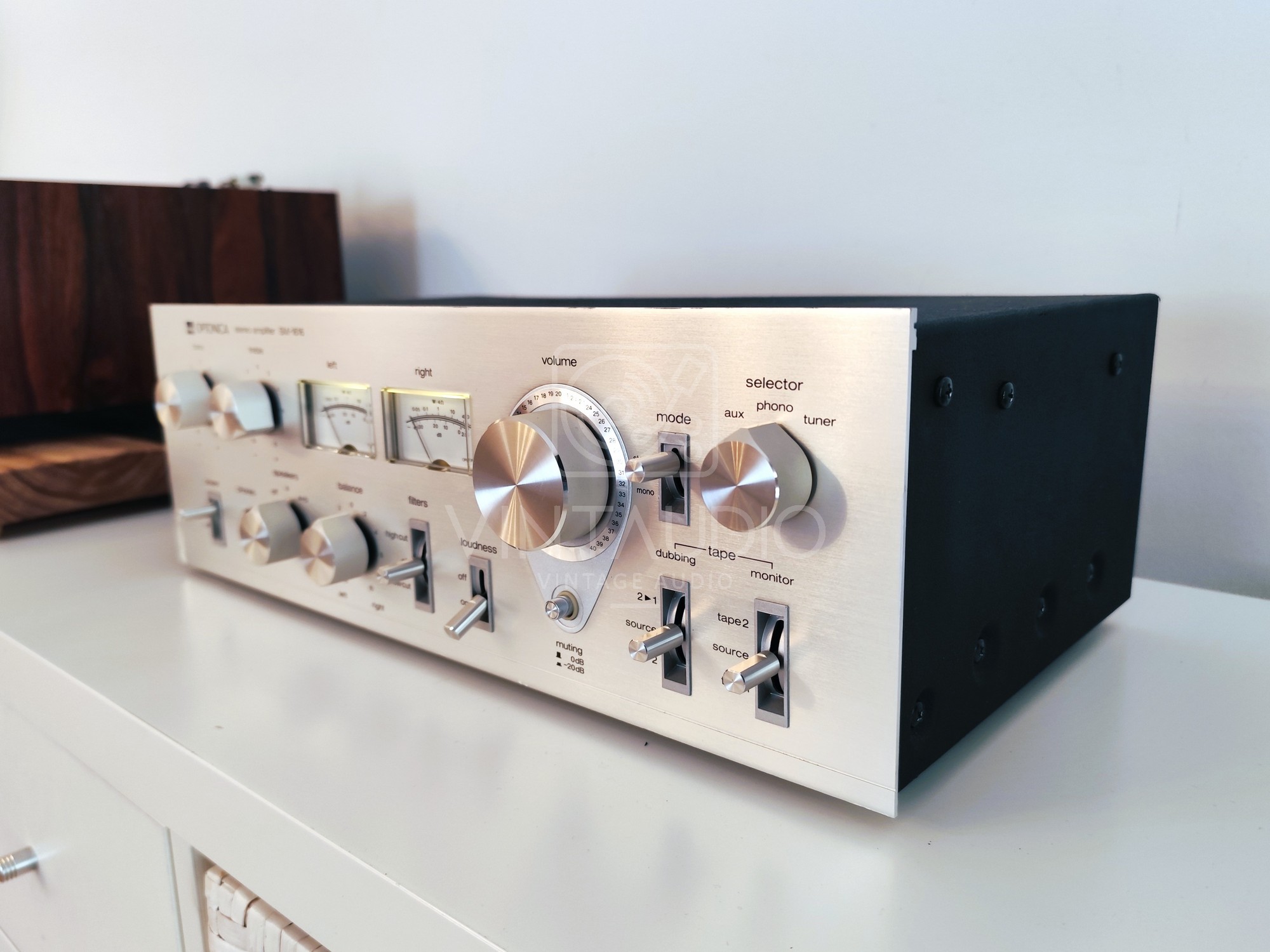
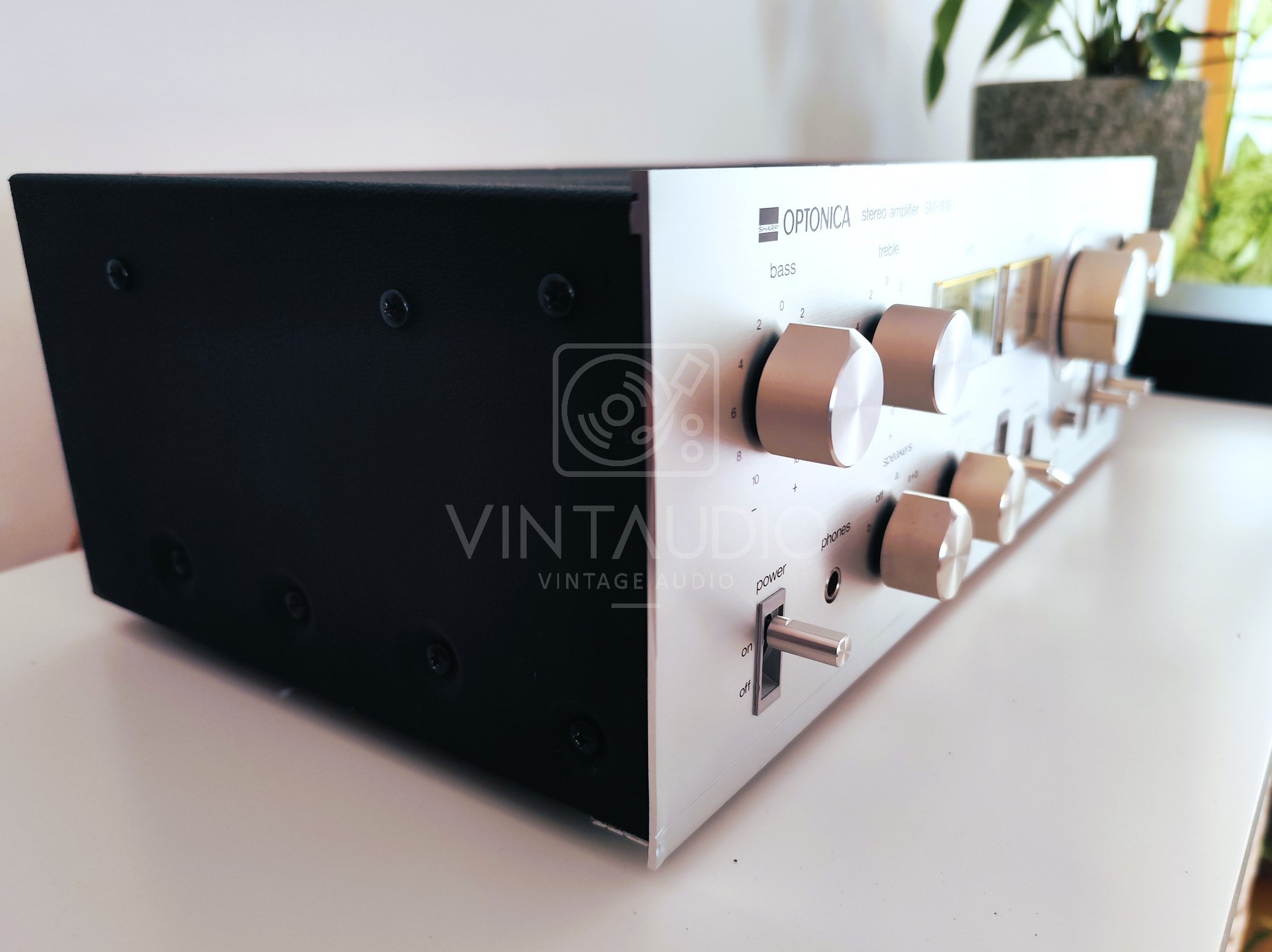
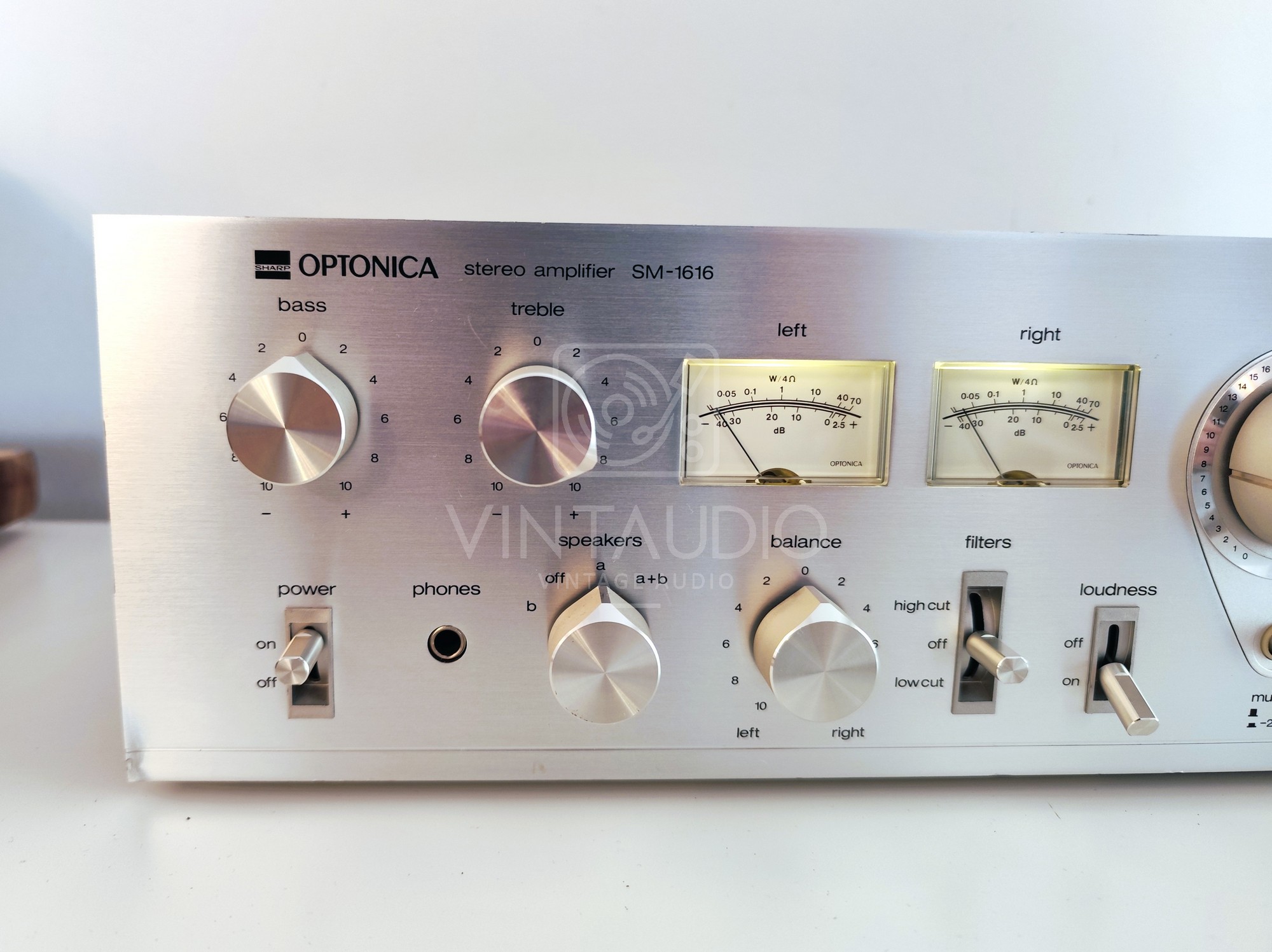
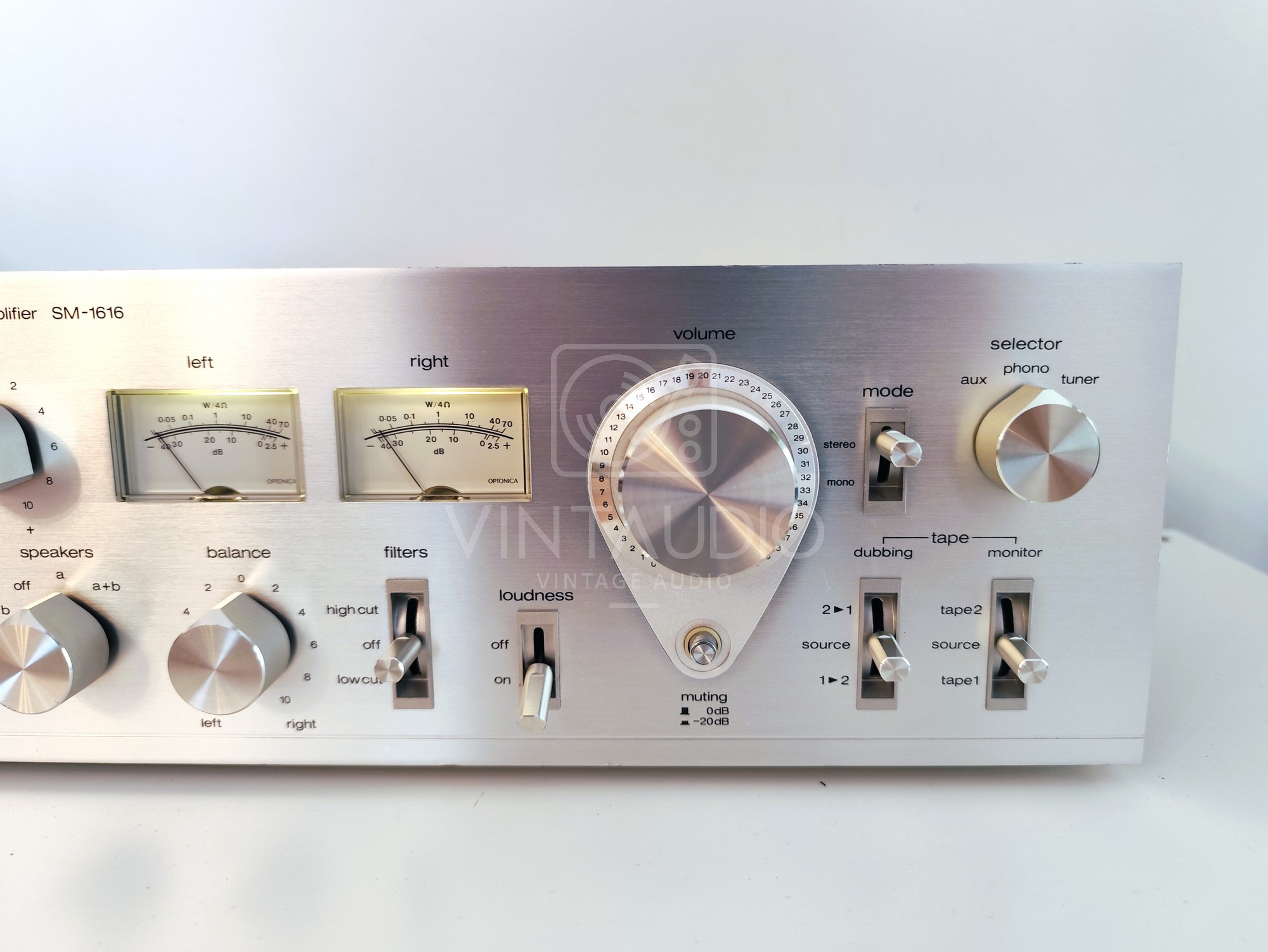
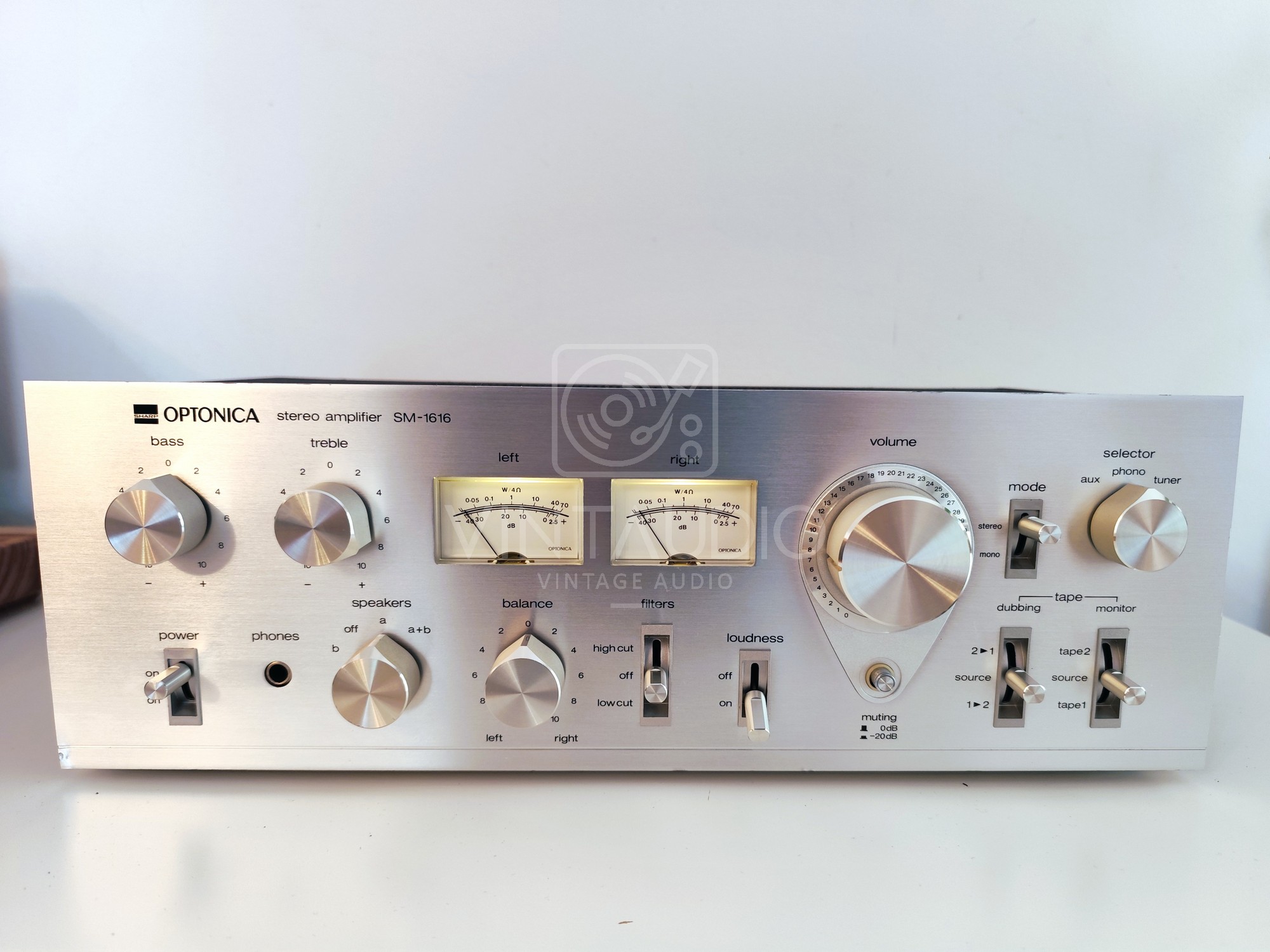
The build quality is equally impressive. The SM-1616 features a sturdy chassis, an elegant brushed-aluminium front panel, precision controls, and beautifully illuminated VU meters that have become one of the visual hallmarks of the Optonica range. Every switch and knob conveys the quality and craftsmanship associated with the finest Japanese hi-fi equipment of the era.
Particular attention was paid to vinyl enthusiasts. The integrated moving-magnet phono stage, with an input sensitivity of 2.5 mV, offers excellent compatibility with a wide variety of cartridges and contributes significantly to the amplifier’s enduring popularity among analogue audio enthusiasts.
Internally, the amplifier employs 24 transistors, 2 FETs, 2 integrated circuits, and 17 diodes, reflecting a design approach focused on reliability and performance. Weighing 7.8 kg, the SM-1616 combines compact dimensions with substantial construction, offering a reassuring sense of quality that is increasingly rare in modern equipment.
Today, the Optonica SM-1616 is considered something of a hidden gem in the world of vintage audio. While brands such as Pioneer, Sansui, Marantz, and Technics often receive greater attention, the SM-1616 delivers a level of performance, craftsmanship, and musical enjoyment that easily rivals many of its more famous competitors.
Its elegant styling, distinctive illuminated VU meters, excellent phono section, and warm yet detailed sound signature make the Optonica SM-1616 a highly desirable amplifier for collectors and music lovers alike. Properly maintained, it continues to provide a rewarding listening experience and serves as an excellent reminder of why the late 1970s remain one of the most celebrated periods in Japanese audio engineering.
Specifications
Power output: 40 watts per channel into 8Ω (stereo)
Frequency response: 15Hz to 60kHz
Total harmonic distortion: 0.2%
Damping factor: 40
Input sensitivity: 2.5mV (MM), 150mV (line)
Output: 150mV (line), 30mV (DIN)
Semiconductors: 2 x IC, 24 x transistors, 2 x FET, 17 x diodes
Dimensions: 442 x 144 x 253mm
Weight: 7.8kg